Key Takeaways
- Haiti’s collapse is a U.S. national security issue.
- Stabilization is the gateway to everything else.
- Security and aid must move together.
On February 10, the Senate Appropriations Subcommittee on State, Foreign Operations and Related Programs delivered a blunt assessment: Haiti is nearing collapse – and stabilizing the nation is a U.S. national security priority.
Sen. Mullin opened the hearing, describing Haiti as a failed state “under siege by armed gangs” and facing daily threats to “the viability and legitimacy of the state.”
The numbers are stark. More than six million Haitians need humanitarian assistance. Nearly 1.4 million are displaced. Armed groups exert influence over roughly 90 percent of Port-au-Prince. Between January and September 2025 alone, 6,700 people were killed, 491 kidnapped and 1,270 incidents of sexual and gender-based violence recorded. Nearly 5.9 million people face acute food insecurity. Children now account for roughly half of gang recruits.
“These are reported figures,” warned Austin Holmes, CEO of Caribbean Security Group and a longtime Haiti-based operator. “The true scale we know is likely much higher.”
And all of it, he reminded senators, is unfolding less than 700 miles from Florida.
One Word: Stability
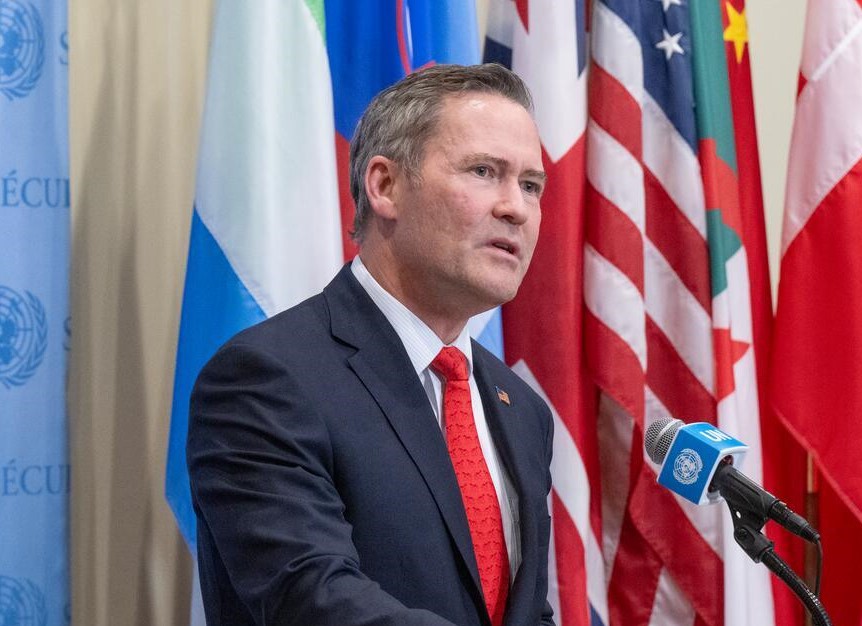
Amb. Henry Wooster boiled down U.S. policy to a single word: stability. “We define that as A, no collapse of the state, and B, no mass illegal migration onto U.S. shores,” he said.
That framing reflects hard geopolitical reality. Instability in Haiti fuels migration, empowers transnational criminal networks and creates permissive space for arms, narcotics and illicit finance to flow through the Caribbean. Holmes described increasingly sophisticated trafficking pipelines, warning that governance collapse in Haiti reverberates far beyond its borders.
But both witnesses made clear: stability starts with security.
“Aid cannot move. Food cannot reach children. Clinics cannot function. Schools cannot operate,” Holmes testified. “Without freedom of movement, humanitarian response cannot succeed.”
“Without freedom of movement, humanitarian response cannot succeed.”
Austin Holmes
Even when assistance is available, gangs are obstructive. Haiti’s Finance Ministry estimates that dominant gang networks generate between $60-$75 million annually through extortion tied to shipments from the Dominican Republic – effectively running a parallel revenue state.
From Criminal Gangs to Insurgent Movements
“The immediate threat to Haiti’s state survival is a coalition of some 20 armed hostile organizations misleadingly called gangs,” Wooster testified. In 2025, the U.S. designated two of the most powerful groups as Foreign Terrorist Organizations. “They are now operating as proto-insurgent movements.”
Roughly 12,000 gang members operate nationwide, with about 3,000 driving the most acute violence. Haiti’s National Police counts approximately 6,000 officers on the books, but “maximally 400 do most of the fighting,” Wooster stressed.
The imbalance has produced territorial fragmentation, shuttered institutions and stalled elections — a widening legitimacy vacuum.
A New Mandate from the UN
In response, senators examined the newly authorized multinational Gang Suppression Force, established under UN Security Council Resolution 2793 following sustained U.S. diplomacy.
The resolution authorizes a 5,500-member force to conduct intelligence-led operations against armed groups, secure critical infrastructure and strengthen Haitian security forces. Fifteen countries pledged more than 11,000 personnel, narrowed to a final deployment of 5,500 uniformed personnel plus 50 civilians. Initial operating capability is expected in April, with full capacity targeted for September.
Wooster repeatedly stressed what this mission is not: a peacekeeping operation.
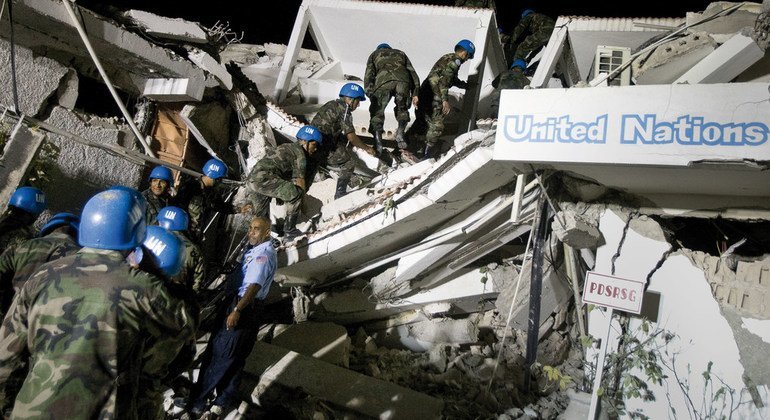
The force is overseen by a standing group of partner nations – not traditional UN peacekeeping command structures – reflecting lessons from the UN Stabilization Mission in Haiti (MINUSTAH), whose 2004-2017 deployment left what Holmes described as a legacy “for most Haitians is not positive.” He added, “It was viewed as a foreign invasion.”
Safeguards are central to the new model. Troop-contributing countries must screen units before deployment. Personnel receive additional training upon arrival. Units are subject to UN human rights due diligence, and individuals are vetted under U.S. Leahy laws.
“If a battalion has been implicated in gross violations of human rights, it cannot deploy,” Wooster said. “And if the U.S. has any record – classified or unclassified – tying an individual to abuse, they are barred.”
Security and Aid: Two Sides of the Same Coin
While security dominated the hearing, senators stressed that force alone will not stabilize Haiti.
“We support assistance to Haiti not as an act of charity, but because it is in our own interest,” said Sen. Schatz. He defended multilateral engagement directly: “When it comes to managing complex challenges like Haiti and making sure the United States doesn’t foot the entire bill, [the UN] is a critical partner in burden-sharing.”
“When it comes to managing complex challenges… and making sure the United States doesn’t foot the entire bill, [the UN] is a critical partner in burden-sharing.”
Sen. Brian Schatz
The new force is paired with a UN support office funded through assessed contributions – a structural fix designed to avoid the underfunding that plagued earlier efforts.
Holmes described stabilization as phased: secure humanitarian corridors, restore basic services, rebuild livelihoods and gradually return authority to Haitian institutions. “The lesson is not that engagement is futile,” he said. “It’s that security and humanitarian response cannot be treated as separate problems.”
Recent funding disruptions illustrate the cost of disconnecting the two. Approximately $330 million in U.S. commitments were frozen in early 2025, halting roughly 80 percent of U.S.-funded programs. Health centers closed. HIV/AIDS programs serving 35,000 patients were disrupted. UNICEF reached only a fraction of children suffering from severe acute malnutrition. Meanwhile, the UN’s 2025 humanitarian appeal for Haiti was just 26 percent funded.
Without secure access, even well-resourced aid cannot reach those who need it most.
Protecting and Promoting Women
Several senators pressed on the disproportionate toll on women and girls, particularly Sen. Jeanne Shaheen. Holmes described sexual violence as a deliberate terror tactic. “We’ve seen gangs carry out what they call community rapes,” he testified, “systematically raping every female in a community to terrorize it.”
Both witnesses emphasized that protection of women and inclusion of women in recovery efforts must be core measures of success. Wooster noted that Haitian women already drive much of the country’s commerce and civic life – though they remain underrepresented in formal security institutions.
High Stakes
“Haiti’s problems are grave,” Amb. Wooster concluded. “But progress is achievable.”
“Haiti’s problems are grave, but progress is achievable.”
Amb. Henry Wooster
The coming months will test that claim. The Gang Suppression Force begins phased deployment in April. Its success will hinge not only on operational effectiveness, but on sustained funding, accountability and political will.
The hearing made one thing clear: the debate in Washington is no longer whether to engage in Haiti. It is whether engagement can finally be structured differently – with sharper mandates, stronger safeguards and genuine multilateral burden-sharing – to keep a neighboring state from sliding further into collapse.