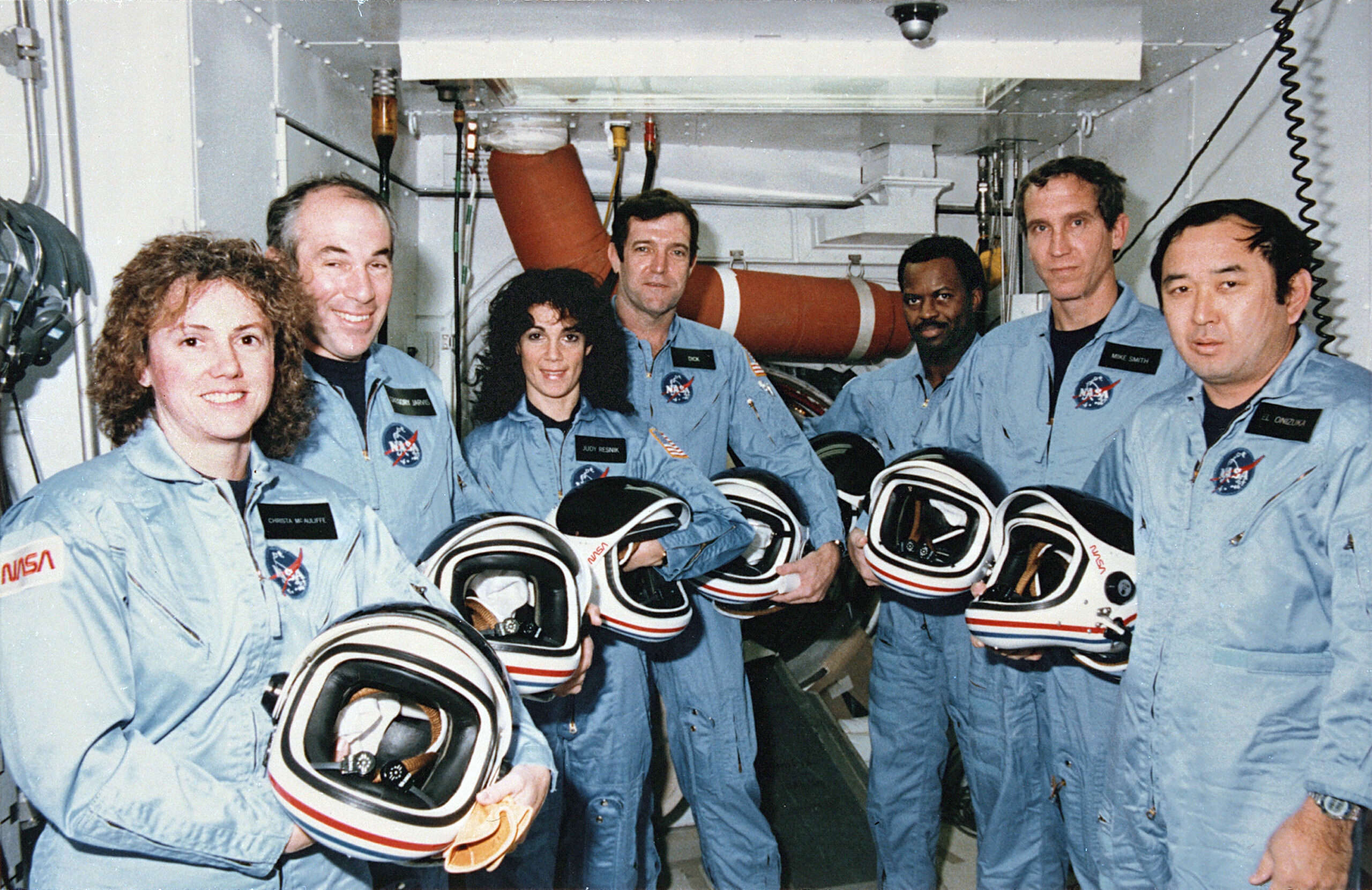
On the morning of January 28, 1986, millions of Americans watched the Space Shuttle Challenger lift off from Cape Canaveral. Just 73 seconds later, it disappeared in a white plume over the Atlantic, killing all seven astronauts on board. Classrooms across the country were tuned in as the first U.S. civilian, New Hampshire teacher Christa McAuliffe, took flight.
What followed was stunned silence, and an enduring lesson that exploration, however inspiring, carries real risk — and that ambition must be matched with safety, accountability and shared rules that keep pace with innovation.
It’s a lesson newly relevant as the U.S. prepares to return to low Earth orbit. Artemis II, NASA’s first crewed lunar mission in a half century, will send astronauts on a ten-day flyby of the Moon — a rehearsal for sustained lunar operations and a stepping stone toward Mars.
And while technology has changed, the stakes have multiplied.
Space: The Final (Strategic) Frontier
The global space economy has ballooned in the decades since the Challenger disaster. It’s now worth an estimated $613 billion and projected to exceed $1.8 trillion by 2035. Satellites underpin GPS navigation, weather forecasting, financial transactions, emergency response, military communications and missile-warning systems — not to mention the phone in your pocket.
At the same time, Earth’s orbit has become both crowded and contested. More than 10,000 active satellites circle the planet, up from fewer than 1,000 a decade ago. Alongside them float at least 36,000 pieces of trackable debris larger than a softball, plus millions of smaller, untraceable fragments.
“Our orbits are congested,” said Aarti Holla-Maini, director of the UN Office for Outer Space Affairs, in a recent interview. “Collision risk is increasing.”
The result is galaxy-turned-foreign policy — one that doesn’t respect national borders.
UNOOSA: The Multilateral Backbone of Space Power
That’s where the UN Office for Outer Space Affairs (UNOOSA) is indispensable. Instead of rockets, flight suits or mission control, their work focuses on the structural necessities of space exploration.
UNOOSA is indispensable. Instead of rockets, flight suits or mission control, their work focuses on the structural necessities of space exploration.
The office serves as the home for the UN Committee on the Peaceful Uses of Outer Space (COPUOS), the forum where countries negotiate the legal and technical foundations of space activity.
Holla-Maini explains, “COPUOS has been the birthplace of all the treaties, principles, guidelines and resolutions that have enabled the space economy that we know today.”
Those agreements established bedrock assumptions of the space age: that outer space cannot be owned, that states are responsible for national space activities — including those of private companies — and that damage caused in space carries liability.
For the U.S., these rules make up the scaffolding beneath commercial launch approvals, operating licenses, debris mitigation standards, insurance and satellite registration requirements. They also shape how private companies operate just as much as how governments do.
Registration, Liability and Stability
One of UNOOSA’s most important jobs is also one of its least visible: keeping the official UN list of everything humans have lobbed into the galaxy: maintaining the UN Register of Objects Launched into Outer Space.
Since 1962, more than 40,000 satellites and space objects have been logged in that register. Only about one in ten still works. The rest, like dead satellites, spent rocket parts and fragments, are still circling Earth or falling back through the atmosphere.
Since 1962, more than 40,000 satellites and space objects have been logged in outer space.
When something goes wrong, this list becomes the starting point. It answers basic questions before politics enter the picture: Who owns the object? Who launched it? Who is responsible if debris causes damage on the ground?
For the U.S., those answers matter. Uncertainty in orbit can quickly turn into litigious misunderstanding, as when falling debris damages property here on Earth (a surprisingly common occurrence). Clear records help prevent accidents from being mistaken for hostile acts.
Setting Space Standards
As more countries and companies enter space, legal alignment has become a strategic priority. Through its Space Law for New Space Actors initiative, UNOOSA helps governments draft national space laws covering licensing, liability, registration and oversight of commercial activity.
In 2024 alone, the office delivered tailored legal advisory missions across Africa, Asia-Pacific, Latin America and Europe — evidence that space is no longer the domain of a handful of powers but a shared, increasingly crowded environment.
But there’s a catch. “We don’t just give countries data,” Holla-Maini says. “We train them how to use it.”
That capacity-building protects countries like the U.S., boasting the world’s most active space economy, so they have confidence that they’re working with global partners who are operating at the highest international standards.
Capacity-building protects countries like the U.S., boasting the world’s most active space economy, so they have confidence that they’re working with global partners who are operating at the highest international standards.
NASA-UNOOSA Partnership
All this underscores why NASA has long recognized the value of UNOOSA, working closely on technical standards, open data practices and safety norms to reach countries that may never work directly with NASA, but whose decisions will shape orbital safety.
Even programs like Space4Youth prove that early and even soft engagement matters. Space4Youth is a kind of zero-gravity cultural diplomacy — an annual competition that brings aspiring astronauts to the U.S. for training with American peers at the U.S. Space & Rocket Center in Huntsville, Alabama.
The Enduring Lesson of Challenger
Challenger is often remembered as a technical failure. But its deeper inheritance was institutional. Safety is not only about perfecting the engineering, but about developing systems that listen, coordinate and act before risk becomes tragedy.
“If space is to remain viable for current and future generations,” Holla-Maini warns, “it requires stewardship.”
“If space is to remain viable for current and future generations, it requires stewardship.”
As Artemis II prepares to fly, the U.S. is not just returning to the Moon. It is maintaining its role in a domain where leadership is measured as much by how far we go, as by how responsibly we help govern the space we all depend on.
And in 2026, there’s no question that we all depend on the space UNOOSA works to protect.