Share

How the Multilateral System Works

Founded in San Francisco and headquartered in New York City, the UN has been central to American foreign policy since 1945. Entering its eighth decade in 2026, the UN was created following World War II to safeguard global peace and ensure the horrors of the Holocaust would never occur again.

While the world has changed significantly since the UN’s early days, the organization remains a force multiplier for the U.S. and a key platform for multilateral diplomacy to mitigate conflict and collectively address challenges that no country can resolve alone.

UN STRUCTURE

The UN Charter that established the United Nations in 1945 created six principal organs. 


  • General Assembly

    The UN General Assembly (UNGA) is the only place where all 193 nations on the planet have an equal voice. It elects members of the Security Council, appoints the Secretary-General and approves the UN budget. Unlike the Security Council, every country gets one vote — and no one has a veto. Member States also choose a new president each year to lead the body for a one-year term. And while its resolutions may be non-binding, they carry real political and moral weight because they reflect the will of the entire international community.

    Interested in following the General Assembly? Meetings of UNGA and the Security Council are aired live on UN TV.

  • Security Council

    The Security Council is the UN’s premier decision-making body, charged by the UN Charter with “primary responsibility for the maintenance of international peace and security.” It has 15 members: five permanent (the “P5” include the U.S., U.K., France, China and Russia) and ten elected to two-year terms by the General Assembly. The Council presidency rotates monthly, with the presiding member managing workflow, chairing meetings and setting the agenda.

    For any resolution to pass, it must earn nine affirmative votes and avoid a negative vote from any permanent member — giving the P5 unilateral veto power over substantive decisions. Since its creation, the Council has been the central forum for addressing global security challenges, from authorizing more than 70 peacekeeping missions to advancing nuclear nonproliferation.

    In 2025, the U.S. worked through the UN Security Council to achieve historic progress in advancing sanctions against Iran, passing the resolution for an end to the war in Gaza and creating the framework for an intervention in Haiti.

    Learn about the Security Council veto.

  • Secretariat

    Headquartered in New York, the UN Secretariat is a 35,000-person civil service – including more than 6,000 Americans – responsible for the UN’s day-to-day operations and for implementing mandates from the General Assembly and Security Council. Its annual budget is around $3.7 billion, roughly the size of New Hampshire’s state budget.

    The Secretariat’s work spans mediating disputes, supporting Security Council sanctions, coordinating disaster relief, promoting economic development and facilitating meetings among Member States.

    The Secretariat is led by the Secretary-General, appointed to five-year terms by the Security Council and confirmed by the General Assembly. While there is no formal term limit, Secretaries-General traditionally serve no more than two. Current Secretary-General, António Guterres, has served since January 1, 2017. The election process for his replacement kicked off in November 2025.

    Learn how the UN elects its leader.

  • Economic and Social Council

    With 54 elected members and more than 1,600 accredited NGOs informing its work (including hundreds of U.S.-based organizations), ECOSOC is one of the UN’s most representative platforms. Its mission is to drive coordination across the UN system, push forward the world’s boldest ambitions and bring governments, experts and partners to the same table.

    The body provides political oversight and coordination for 15 specialized agencies (see below), eight functional commissions and five regional economic commissions, convening governments, NGOs and experts to set norms and solve problems no country can tackle alone.

    For the U.S., ECOSOC is one of the most practical venues for exercising global leadership. Much of its work directly protects Americans. The agencies it oversees help stabilize food and commodity markets that support U.S. agriculture, establish the aviation and maritime rules that keep Americans safe when they travel and maintain health systems that detect outbreaks before they reach U.S. shores. ECOSOC is also home to the High-level Political Forum each July, where countries take stock of progress on priorities that align with U.S. aims around stability, climate resilience and global economic growth.

  • International Court of Justice

    Based in The Hague and created in 1945, the ICJ is the UN’s principal judicial body and the only court that settles legal disputes between countries. It also issues advisory legal opinions at the request of the UN.

    Unlike the International Criminal Court, which prosecutes individuals, the ICJ deals only with states, providing a peaceful alternative to conflict. Its rulings are final, but the court relies on Member States to comply — backed by global legitimacy rather than enforcement power.

    With 15 judges elected by both the General Assembly and Security Council, the ICJ offers a neutral forum that helps uphold international law.

    Learn about the Court.

  • Trusteeship Council

    The Trusteeship Council was created to oversee colonial territories as they transitioned to self-governance. It suspended its work in 1994 when the last trust territory, Palau, gained independence. Though dormant, it still exists as a formal UN organ and could be reactivated if Member States assign it a new role.

    Officially eliminating the Council would require revision of the UN Charter.

Programs, Funds and Other Organizations

The United Nations is more than a single institution — it’s a system of more than 30 affiliated programs, funds and agencies that carry out its day-to-day work. Each has its own leadership, budget and governing structure, but together they form the operational backbone of the UN, delivering everything from humanitarian aid to global health and economic development.

These entities don’t operate in isolation. They work hand in hand with American law enforcement, businesses, universities, faith groups and nonprofits — partnerships that translate global cooperation into tangible benefits for communities across the United States.

Within this broader system are several distinct categories: principal organs, related organizations and a group that has an especially direct impact on everyday life: specialized (or technical) agencies.

VIEW A SNAPSHOT OF THE SYSTEM

SPOTLIGHTING SPECIALIZATION

Working with U.S. counterparts, the 15 specialized UN agencies help keep American communities safe, businesses working, transport moving and people connecting. Each operates independently, while coordinating closely with the UN to address challenges that no single country can manage alone.

Some of these agencies predate the UN itself, tracing their roots back to the 19th century. Others were created more recently to respond to new global realities.

Taken together, their work forms the infrastructure of global stability.

  • Food and Agriculture Organization (FAO)

    The Food and Agriculture Organization (FAO) acts as a global leader in the fight against hunger, working to ensure that every community has reliable access to high-quality, nutritious food. At its core, FAO provides the scientific research, technical training and policy guidance necessary to modernize agricultural systems and protect natural resources. Whether helping a nation combat a devastating pest outbreak or advising on advanced irrigation techniques that conserve water, FAO works on the front lines to transform food systems so they are more efficient, resilient and capable of feeding a growing global population.

    For Americans, the work of FAO is a critical investment in global stability and domestic prosperity. By fostering robust agricultural growth in emerging economies, FAO reduces the volatility of global food prices, which helps maintain stable markets for American agricultural products. As countries modernize their farming operations, they increasingly turn to world-class American innovation — from precision agriculture software and GPS-guided machinery to drought-resistant seeds developed by U.S. researchers. This process creates a vital pipeline for American exporters, turning local development challenges into long-term opportunities for the U.S. agribusiness and tech sectors.

    FAO also serves as a primary architect of international food safety and trade standards, encouraging the rest of the world to adopt rigorous, science-based regulations.

    Ultimately, a more food-secure world is a more predictable and prosperous trading partner for the U.S., securing a competitive edge for our agricultural leaders on the global stage.

    Learn about FAO.

  • International Civil Aviation Organization (ICAO)

    The work of the International Civil Aviation Organization is foundational to safe, seamless global air travel. The agency sets the rules that keep the world flying — mapping airspace, establishing “free range” corridors over oceans, and standardizing everything from airport codes to English-language proficiency for pilots and controllers. Its technical standards underpin air traffic management, navigation systems, flight planning, and personnel licensing — the invisible architecture behind every international flight.

    ICAO also plays a central role in aviation safety and security. Through its Universal Security Audit Programme, the organization identifies vulnerabilities in national aviation systems and provides targeted recommendations to strengthen them. Complementary safety audits ensure countries meet global standards — and the reach is nearly universal. As of January 2025, ICAO had conducted safety oversight activities in 187 Member States, covering 99 percent of international air traffic.

    The agency’s impact extends to border security as well. ICAO sets international standards for biometric passports and operates the Public Key Directory (PKD), enabling countries to verify the authenticity of travel documents in real time. The United States joined the PKD in 2007 and serves on its governing board — helping shape the very systems that keep global travel secure, efficient, and trusted.

    Learn about ICAO

  • International Fund for Agricultural Development (IFAD)

    Established in the 1970’s in response to the global food crisis, the International Fund for Agricultural Development (IFAD) operates as a unique hybrid of a UN agency and an international financial institution. While many agencies focus on policy or emergency food aid, IFAD specializes in long-term, low-interest loans and grants specifically designed to reach the world’s most vulnerable rural populations. By investing in the “last mile” of development — remote, often forgotten regions — IFAD empowers small-scale farmers, fishers and rural entrepreneurs to move beyond subsistence living. It provides the financial and technical bridge these communities need to adopt sustainable farming practices, improve climate resilience and build the rural infrastructure, like roads and storage facilities, essential for turning small farms into thriving local businesses.

    For Americans, IFAD is a strategic investment in global stability and future economic opportunity. When IFAD empowers smallholder farmers to increase their productivity and incomes, it helps stabilize developing economies, reducing the volatility that often leads to conflict and the need for expensive U.S. humanitarian intervention. As rural communities grow, they transition from subsistence producers to active participants in the global economy.

    Because IFAD’s model focuses on projects led and owned by the countries themselves, it ensures that economic growth is truly sustainable while directly tackling the root causes of food insecurity.

    Learn about IFAD.

  • International Labour Organization (ILO)

  • International Maritime Organization (IMO)

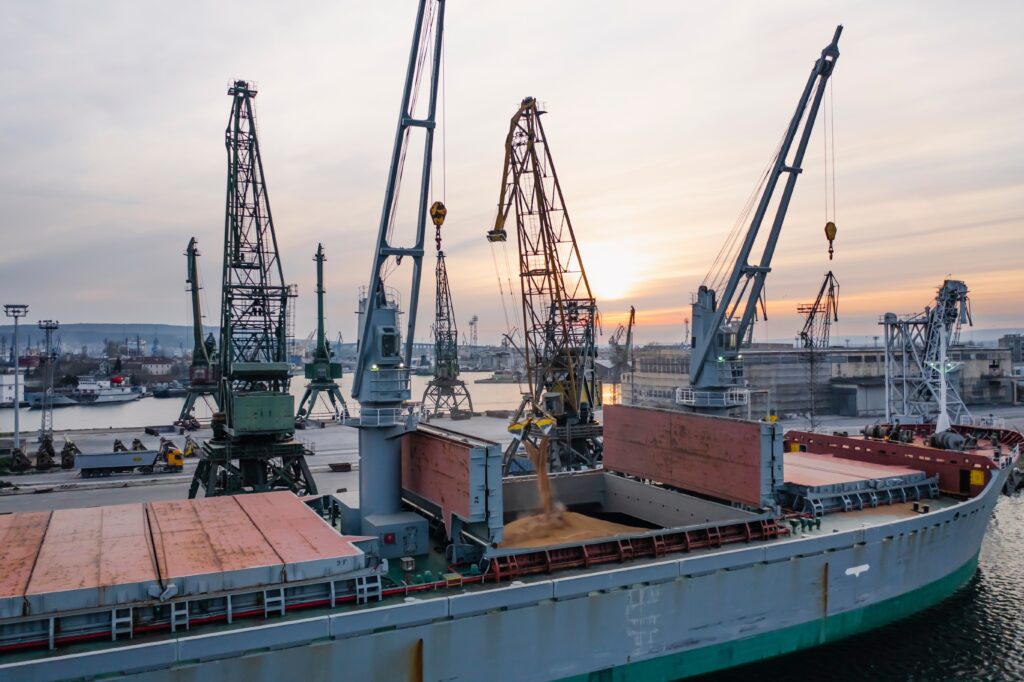
    The work of the International Maritime Organization underpins the safety and security of the global shipping system that powers the world economy. IMO sets international standards for ships, ports and maritime facilities, establishes training and certification requirements for seafarers and develops rules governing ship design and operations. It also coordinates global efforts to combat piracy, terrorism and other threats to maritime security.

    The impact is measurable. In part due to IMO standards, global shipping losses have declined by more than 65 percent over the past decade. Safety and environmental rules — including double-hull requirements for oil tankers, along with improved training and operating procedures — have helped reduce oil spills by roughly 90 percent compared to levels in the 1970s.

    With nearly 90 percent of global trade transported by sea, IMO’s work is essential to protecting critical supply chains and keeping trade routes open and reliable. For the United States, that means greater economic stability, more secure imports and exports and a more resilient global trading system.

    Learn about IMO

  • International Monetary Fund (IMF)

    With a total lending capacity of around $1 trillion, the International Monetary Fund is one of the quiet pillars of the global economy — rarely in the headlines when things are going well, but indispensable when they’re not. Created in the aftermath of World War II, the IMF was designed to help prevent the kind of financial instability that can spiral into economic collapse, political unrest and conflict.

    At its core, the IMF works to keep the global financial system steady and predictable. It does this by monitoring economies, offering policy guidance and — when crises hit — providing emergency financing to countries in distress.

    The U.S. has long been the IMF’s largest shareholder, giving it significant influence over the institution’s priorities and direction. That leadership role allows the United States to help shape international economic standards, promote transparency and encourage responsible fiscal policies around the world — all of which align with U.S. economic and national security interests.

    Importantly, the IMF is not foreign aid in the traditional sense. Its financial support is typically structured as loans that countries must repay, often paired with reforms aimed at restoring stability and growth. When those efforts succeed, they can prevent deeper crises that would otherwise ripple outward — disrupting supply chains, destabilizing regions and affecting American businesses and workers.

    In a deeply interconnected world, the IMF serves as both an early warning system and a financial backstop. It’s a forum where the United States can work alongside other nations to address shared challenges — from debt distress to currency volatility — before they become global emergencies.

    Learn about the IMF

  • International Telecommunication Union (ITU)

    The work of the International Telecommunication Union is central to the connectivity and interoperability of global communications networks — with direct implications for the U.S. telecommunications industry, as well as American defense and intelligence capabilities. By allocating radio spectrum and satellite orbits, and developing the technical standards that allow networks to interconnect seamlessly, ITU makes modern communication possible — even in the world’s most remote locations.

    ITU is also emerging as a key forum for shaping the future of artificial intelligence. By convening governments, the private sector and academia, it provides a neutral platform to build shared understanding around AI capabilities, technical standards, and policy frameworks. At a time of intensifying strategic competition — particularly between the United States and China — maintaining a strong U.S. presence in these discussions is essential.

    The organization is currently led by Doreen Bogdan-Martin, an American and former U.S. Department of Commerce official. Elected Secretary-General in 2022, she decisively defeated a candidate backed by Russia and China — helping ensure that ITU leadership reflects a commitment to a free, open and interoperable Internet, rather than increased state control.

    Learn about ITU

  • UN Educational, Scientific and Cultural Organization (UNESCO)

    The UNESCO World Heritage Program, which recognizes and promotes sites of exceptional cultural and natural significance, plays a powerful role in driving international tourism and supporting local economies. The United States is home to 26 World Heritage sites, including Independence Hall, Monticello, Everglades National Park, Yellowstone National Park, and Grand Canyon.

    On average, UNESCO World Heritage designation brings a significant economic boost — often generating at least $100 million annually in tourism activity, supporting local jobs, small businesses, and municipal tax bases.

    The U.S. decision to withdraw from UNESCO in 2025 carries real consequences. It has strengthened the influence of countries like China — now the organization’s largest financial contributor — and risks undermining future efforts to secure new World Heritage designations in the United States, along with the economic benefits they provide.

    Learn about UNESCO

  • UN Industrial Development Organization (UNIDO)

    UNIDO works to turn developing regions into thriving hubs of modern industry. By championing sustainable manufacturing and clean energy, UNIDO helps nations build the infrastructure needed to participate in the global economy. Think of it as a bridge-builder: it provides the expertise, technology and standards required to modernize factories in emerging markets, helping them move away from inefficient practices and toward high-tech, environmentally sound production.

    For Americans, support for UNIDO is a smart investment in our own economic future. As UNIDO helps nations grow, it effectively expands the customer base for high-quality American goods and services. Because these projects prioritize modern, sustainable standards, they create a surging demand for U.S.-made machinery, engineering services and clean energy solutions.

    Moreover, by encouraging the rest of the world to “play by the rules” of safety and environmental responsibility, UNIDO also helps level the playing field, ensuring that American manufacturers aren’t forced to compete against countries cutting corners. Ultimately, a more industrialized world is a more reliable, prosperous trading partner for the U.S.

    Learn about UNIDO

  • UN Tourism

    UN World Tourism helps turn global travel into a driver of economic growth, stability and connection. Behind the scenes, it sets standards, tracks trends and supports countries in building safe and sustainable tourism systems.

    For the U.S., the stakes are high. Tourism generates roughly $3 trillion in total economic output across the U.S. economy, supporting millions of jobs in hospitality, transportation and small businesses nationwide. A stable, growing global travel system — backed by international standards — helps keep those visitors and dollars flowing.

    UN Tourism also helps the industry recover from shocks like the COVID-19 pandemic by coordinating data, guidance and policy responses that rebuild traveler confidence.

    In a world where travel fuels both economies and relationships, UN Tourism gives the United States a seat at the table to shape how one of its most important industries grows — delivering real returns at home while strengthening stability abroad.

    Learn about UNWTO

  • Universal Postal Union (UPU)

    The Universal Postal Union underpins the global postal system, making it possible for Americans to send and receive goods and conduct business across borders — from London to São Paulo. By setting international standards and promoting affordable, reliable postal services worldwide, UPU enables U.S. businesses — especially small and medium-sized enterprises — to reach global markets at lower cost.

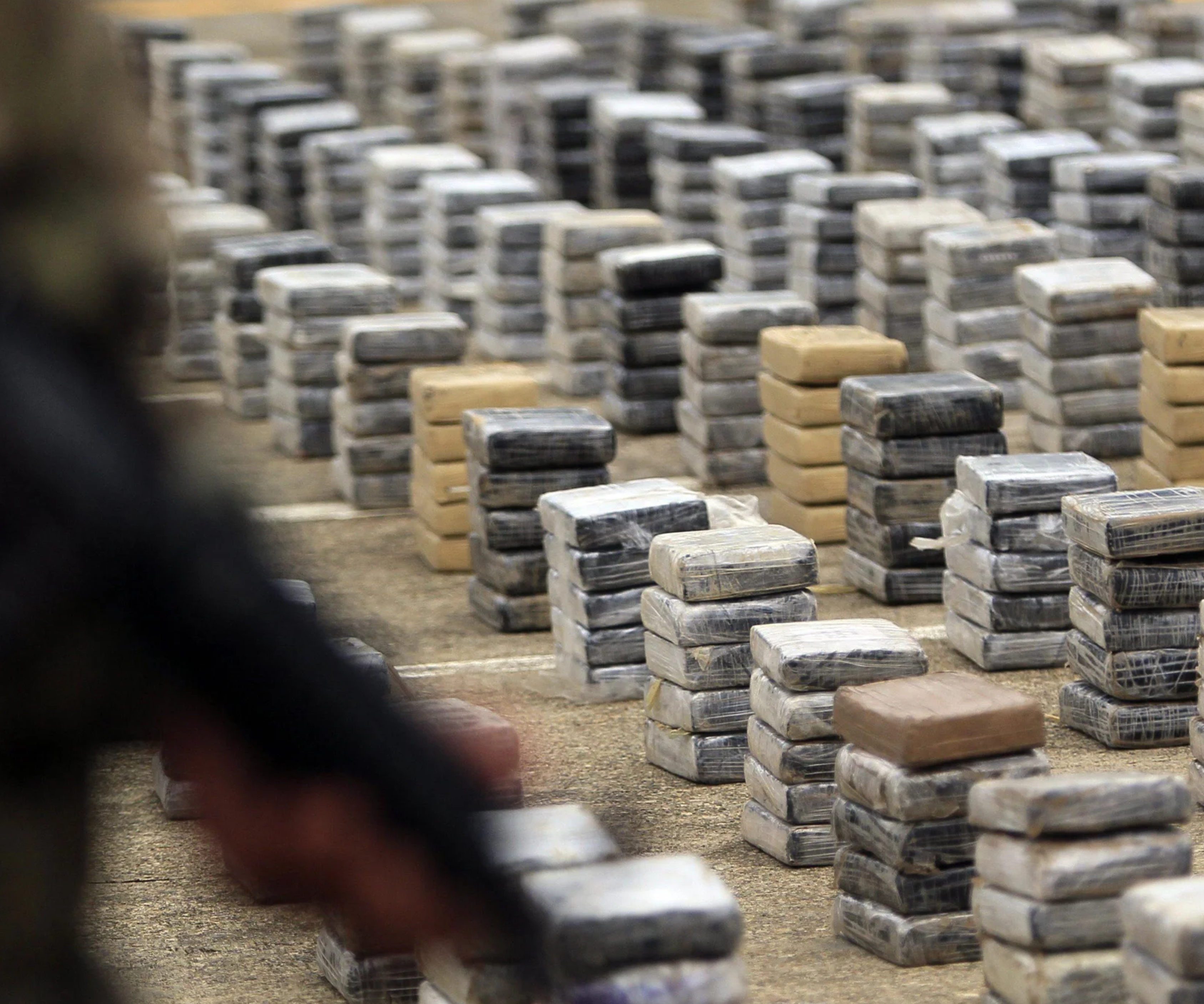
    UPU also plays a growing role in mail security. The organization is working with member countries to strengthen screening, improve data sharing and combat the trafficking of illicit goods — including opioids — through international mail networks, helping protect American communities while keeping global commerce moving.

    Learn about UPU.

  • World Health Organization (WHO)

    The World Health Organization helps keep Americans safe by strengthening global health systems and stopping outbreaks before they reach our shores. It tracks emerging threats, sets international health standards and coordinates rapid responses when crises hit.

    For the U.S., that work is deeply interconnected with our own health and scientific leadership. More than 25 WHO collaborating research centers are based across the country, linking American universities and institutions to a global network of data, expertise and innovation. That collaboration helps drive breakthroughs while ensuring the U.S. stays at the forefront of global health.

    WHO also plays a critical role in managing pandemics — sharing data, guiding responses and helping countries contain outbreaks before they become global emergencies.

    In a world where diseases know no borders, WHO gives the United States a platform to lead, shape global standards and protect Americans at home — while advancing health and stability worldwide.

    Learn about WHO

  • World Intellectual Property Organization (WIPO)

    According to the U.S. Patent and Trademark Office, intellectual property-intensive industries directly and indirectly support more than 47.2 million U.S. jobs — accounting for roughly one-third of total employment. Protecting that innovation base is critical to American competitiveness.

    WIPO plays a central role in that effort, helping drive innovation and economic growth through the global registration and protection of patents, copyrights and other forms of intellectual property. WIPO also offers arbitration and mediation services to resolve cross-border IP disputes — used by businesses of all sizes, universities and R&D institutions in more than 70 countries, including the United States. These services provide a clear advantage: they are typically faster, more flexible and far less costly than traditional court litigation — enabling American innovators to protect their ideas and compete globally with greater confidence.

    Learn about WIPO

  • World Meteorological Organization (WMO)

    WMO is the backbone of how the world tracks weather and climate. It sets common standards and runs a global data-sharing network, allowing countries to exchange everything from local temperature readings to satellite observations. That shared system powers the forecasts people rely on every day — and the early warnings that save lives — while also feeding long-term climate models.

    The U.S. has been a core partner from the start. Through the National Oceanic and Atmospheric Administration (NOAA), the U.S. both contributes to and draws from this global pool of data, strengthening the accuracy of domestic forecasts, especially for severe weather.

    That collaboration reaches from global systems down to specific sites. The Mount Washington Observatory, with records dating back to 1932, acts like a fixed “weather balloon,” capturing unique atmospheric data shaped by extreme mountain conditions. Meanwhile, NOAA’s National Centers for Environmental Information (NCEI) manage vast archives like the Global Historical Climatology Network, which compiles data from more than 100,000 stations worldwide. The U.S. isn’t just a participant — it helps set the standard for how this data is shared and used.

    Beyond U.S. borders, NOAA’s research offices lead partnerships that generate drought and flood outlooks for regions like Africa and Central Asia. Through programs like the Voluntary Cooperation Program, the U.S. shares technical expertise, helping other countries strengthen their own monitoring systems — and, in turn, improving the global dataset.

    U.S.-WMO cooperation is a clear example of science diplomacy in action. By committing to freely share critical weather and climate data, the United States helps sustain a system that protects lives and connects everything from a mountaintop in New Hampshire to research labs around the world.

    Learn about WMO

  • World Bank Group (WBG)

    The World Bank Group (WBG) is a family of five interconnected global institutions founded in 1944 at the Bretton Woods Conference in New Hampshire. Born from the need to rebuild a war-torn world, it has since evolved into the world’s largest source of development financing and technical assistance.

    Today, WBG works to end extreme poverty and boost shared prosperity by providing low-interest loans, grants and expert policy advice to developing nations. Its work spans critical sectors — infrastructure, healthcare, energy and climate resilience — helping to stabilize economies and create the foundational conditions for growth.

    For Americans, the World Bank Group serves as a powerful strategic tool for economic and national interests. Because WBG was founded in the U.S. and maintains a tradition of U.S. leadership, it helps ensure that the global development agenda reflects international standards of transparency, sustainability and market-driven growth. When WBG helps developing countries build stable, functioning economies, it reduces global instability that can lead to conflict or humanitarian crises. More directly, WBG’s massive scale of development projects creates a consistent demand for high-quality goods, services and engineering expertise — areas where American firms are particularly well-positioned.

    By supporting countries as they modernize, WBG opens new, reliable markets for American exporters. The U.S. Department of Commerce even maintains a dedicated liaison office to help American companies compete for and secure procurement contracts generated by World Bank projects.

    The World Bank Group includes the International Bank for Reconstruction and Development (IBRD), the International Development Association (IDA), the International Finance Corporation (IFC), the Multilateral Investment Guarantee Agency (MIGA) and the International Centre for Settlement of Investment Disputes (ICSID). 

    Learn about the World Bank Group

Agencies Supporting People and the Planet

COP

UNFCC

In 1992, the United Nations Earth Summit led to the creation of the UN Framework Convention on Climate Change to reduce emissions and tackle the climate crisis. All signatories meet annually at the Conference of Parties (COP) for a status update. U.S. President George H.W. Bush signed the treaty in 1992, which the Senate unanimously ratified.