In recent weeks, policymakers have been drawing comparisons between the Black Sea Grain Initiative and potential responses to the closure of the Strait of Hormuz, with European officials exploring whether a similar diplomatic approach could help reopen one of the world’s most critical energy corridors.
At the same time, UN Secretary-General António Guterres has proposed restarting fertilizer shipments as a way to stabilize trade flows.
In an internal planning document, UN officials warned that disruptions in Hormuz have “triggered a critical disruption to global fertilizer supply chains, affecting more than one-quarter of globally traded volumes” that pose a “systemic risk to global food production.”
The strategy: restore the flow of one essential commodity to build confidence, then expand from there.
But what can the Black Sea deal actually tell us about what’s possible in Hormuz?
A Diplomatic Win
When Russia’s full-scale invasion of Ukraine in 2022 threatened to sever global food supply chains, diplomacy looked all but impossible. Ukrainian ports were blockaded, insurers pulled back from the Black Sea and tens of millions of tons of grain were effectively stranded.
Yet out of that impasse emerged one of the most consequential multilateral achievements of the war.
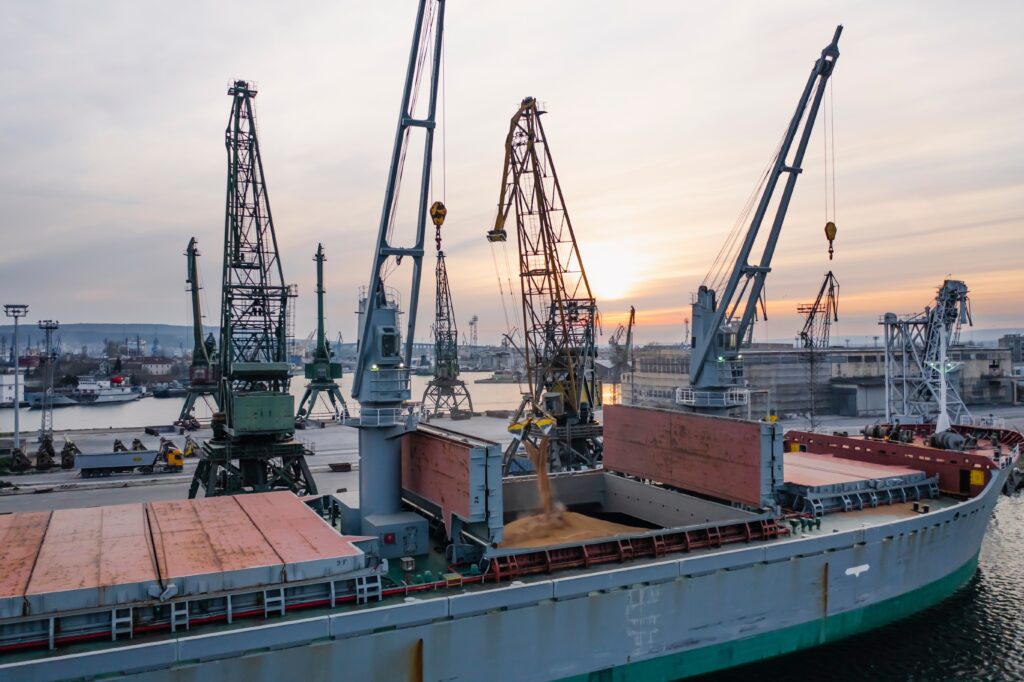
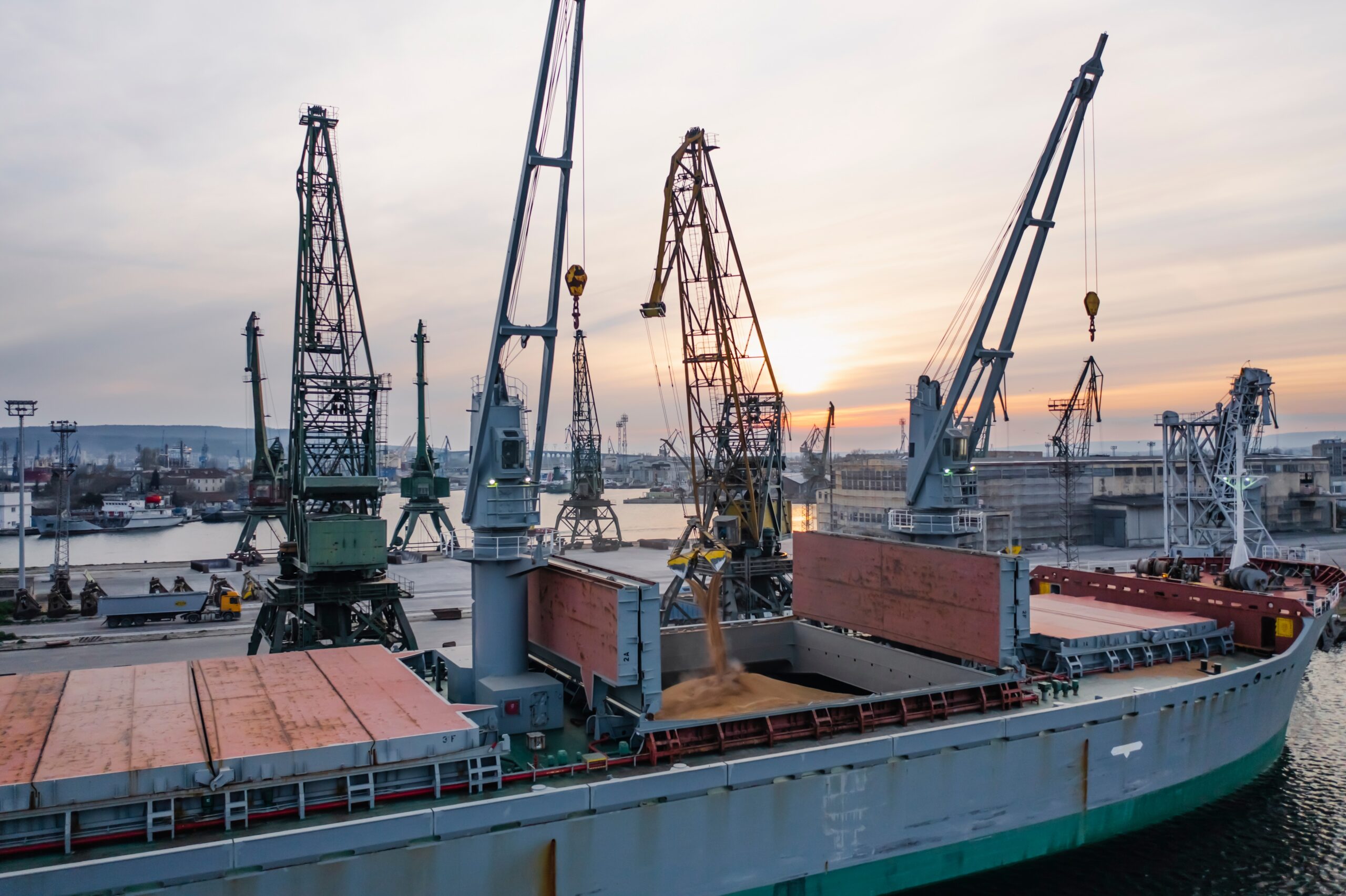
Brokered by the UN and Türkiye, the Black Sea Grain Initiative established a monitored maritime corridor that ultimately enabled the export of more than 30 million metric tons of Ukrainian grain and fertilizer to global markets. It was not a sweeping political agreement, but a tightly constructed operational one built on inspections in Istanbul, continuous vessel tracking and a joint coordination mechanism designed to manage risk in real time.
As the world is painfully aware, the deal did not end the war, nor did it eliminate risk. But it did temporarily stabilize global food prices and ease pressure on import-dependent countries. It also demonstrated that even adversaries could accept limited, functional cooperation when the costs of disruption become too high.
Just as importantly, it showed what multilateral diplomacy can deliver when major powers remain engaged — even minimally — with shared global stakes.
That precedent now looms over Hormuz.
A Dangerous Chokepoint
To be fair, the comparison to the crisis in the Gulf has its limits.
The Strait of Hormuz is not the Black Sea. It’s narrower, more militarized and far more central to the global economy. Roughly one-fifth of the world’s oil supply transits through it, alongside significant volumes of liquefied natural gas and petrochemicals.
Today, Iran has effectively transformed the waterway into an active battleground, with predictable consequences. Oil prices remain well above $100 a barrel and uncertainty now defines the market.
But the deeper disruption is less visible — and potentially more consequential.
Fertilizer exports — critical to global agriculture — have been directly affected. More than a quarter of globally traded supply is now at risk, raising the prospect of reduced crop yields and rising food prices in the months ahead, particularly across import-dependent regions in Africa and South Asia.
What began as an energy shock is already evolving into a broader systemic threat.
And that is exactly the kind of spillover the Black Sea deal was designed to prevent.
Lessons and Limits of the Black Sea
The Black Sea deal worked because it aligned, however briefly, with the interests of all parties. Grain and fertilizer were humanitarian goods. Blocking them carried political and reputational costs.
Hormuz operates under a very different logic.
Here, access is not a shared problem, but leverage. As analyst Mostafa Ahmed wrote, Iran’s closure of the Strait reflects a “strategic decision” to maximize economic pressure, not a temporary disruption to be resolved.
And the legal framework is even less stable. Establishing a protected corridor would likely require, as Ahmed continued, “a novel international legal framework” granting commercial immunity within an active war zone — an ambitious proposition in the absence of trust.
Fertilizer First
That’s why the United Nations is, astutely, not attempting to altogether replicate the Black Sea initiative.
Instead, it’s doing what made that agreement work: narrowing the scope.
The current proposal focuses on fertilizer shipments — goods with immediate global consequences and a clear humanitarian dimension. The plan includes inspections, vessel tracking and a coordination mechanism (likely based in Oman) to reduce miscalculation and create a controlled channel for trade.
In effect, they’re opening the waters for some essential movement while testing the waters to see whether cooperation itself can be reintroduced.
That may sound modest. In fact, it’s ambitious.
The Takeaway
It also points to a broader dynamic Washington shouldn’t ignore.
The Black Sea initiative is a reminder that even in the midst of conflict, cooperation is possible.
Hormuz is a more volatile environment. The risks are higher, the incentives less aligned. And importantly, the United States is not a bystander, but an active participant. That brings leverage and limits. Any U.S.-led effort to reopen the Strait will be viewed through the prism of the conflict itself.
That’s also where the UN becomes essential.
It remains one of the few actors able to convene, coordinate and broker limited agreements between parties otherwise unable or unwilling to engage.
For Washington, the UN expands the toolkit of statecraft. Military options escalate. Economic pressure takes time. Bilateral diplomacy is thorny. Multilateral channels offer something else: a way to structure cooperation when broader agreement is out of reach.
At a moment when U.S. support for multilateralism is tepid at best, the lessons of the Black Sea initiative aren’t that diplomacy can resolve a crisis — but that it can deliver where alternatives fall short.