If you think oil is the most important resource moving through the Middle East, look beneath the surface.
Roughly a fifth of the world’s energy supply passes through the Strait of Hormuz.
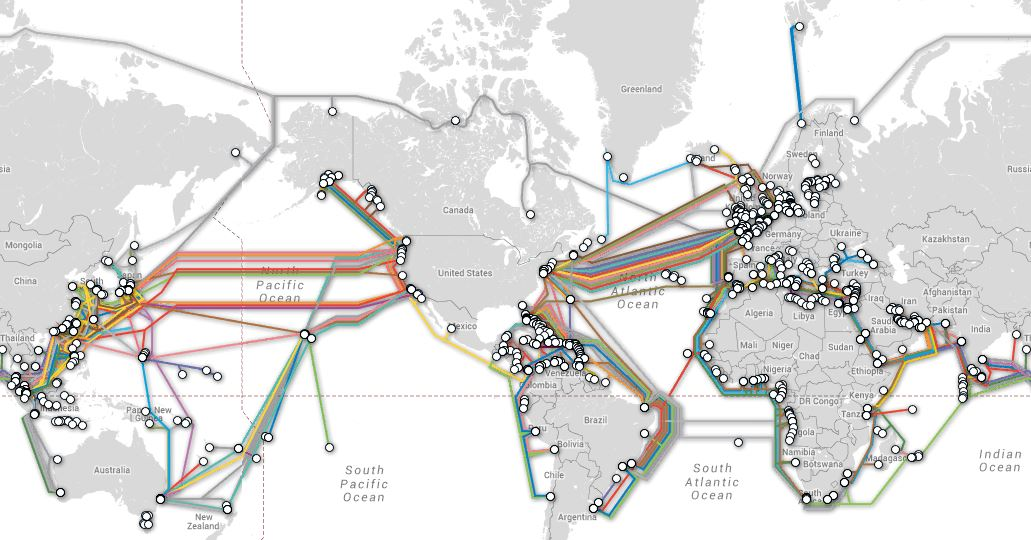
But to the west, in the Red Sea, something just as critical is at risk: a dense web of submarine cables carrying nearly all internet traffic between Africa, Asia and Europe — about 18 percent of the world’s data.
This is the infrastructure no one thinks about until it fails. And lately, it’s swimming in dangerous waters.
A System Under Strain
In 2024 and 2025, internet disruptions rippled across the Middle East and South Asia after several of these undersea cables were severed by Iranian-backed Houthi forces reacting to the war in Gaza.
Within minutes, internet in India, Pakistan, UAE, Kuwait and several Gulf nations went from high-speed trading in oil markets and efficient call center management to a snail’s pace.
Now, as tensions with Iran escalate, tech giant Meta and its partners just announced they would pause work in the Persian Gulf on 2Africa Pearls, one of the most ambitious subsea cable systems ever built.
Turns out the Strait of Hormuz — long understood as a strategic energy corridor — is an equally vital connectivity corridor. Together with instability in the Red Sea, a dual chokepoint is emerging.
And that’s a big problem, because these transit lines were never designed for war.
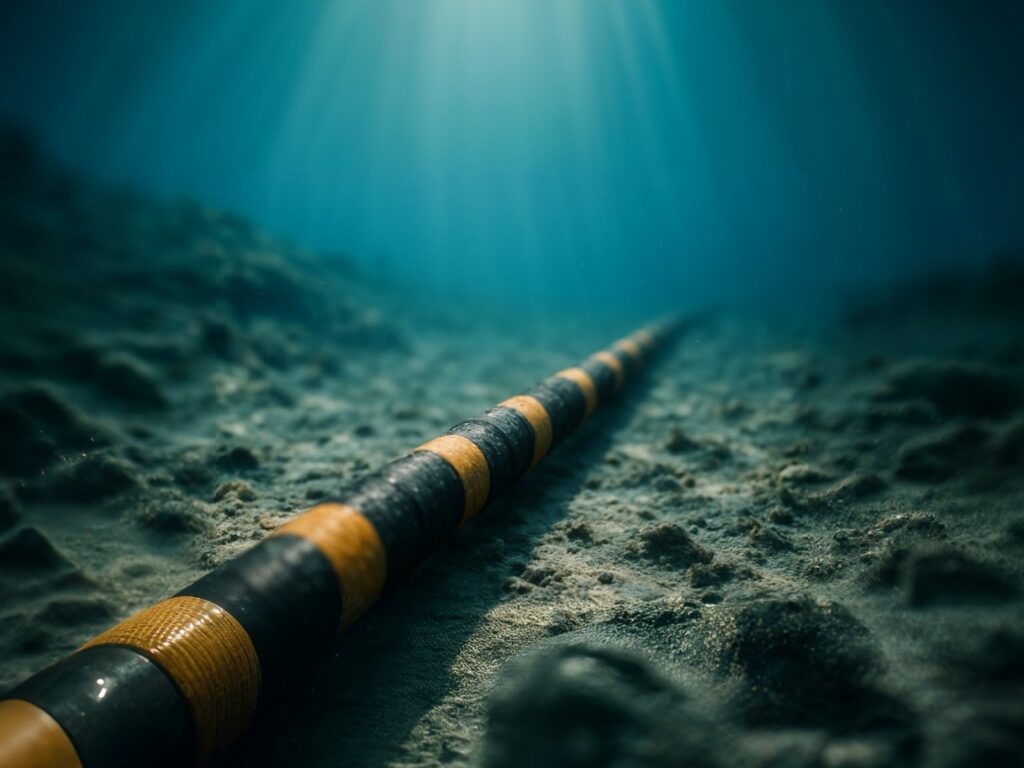
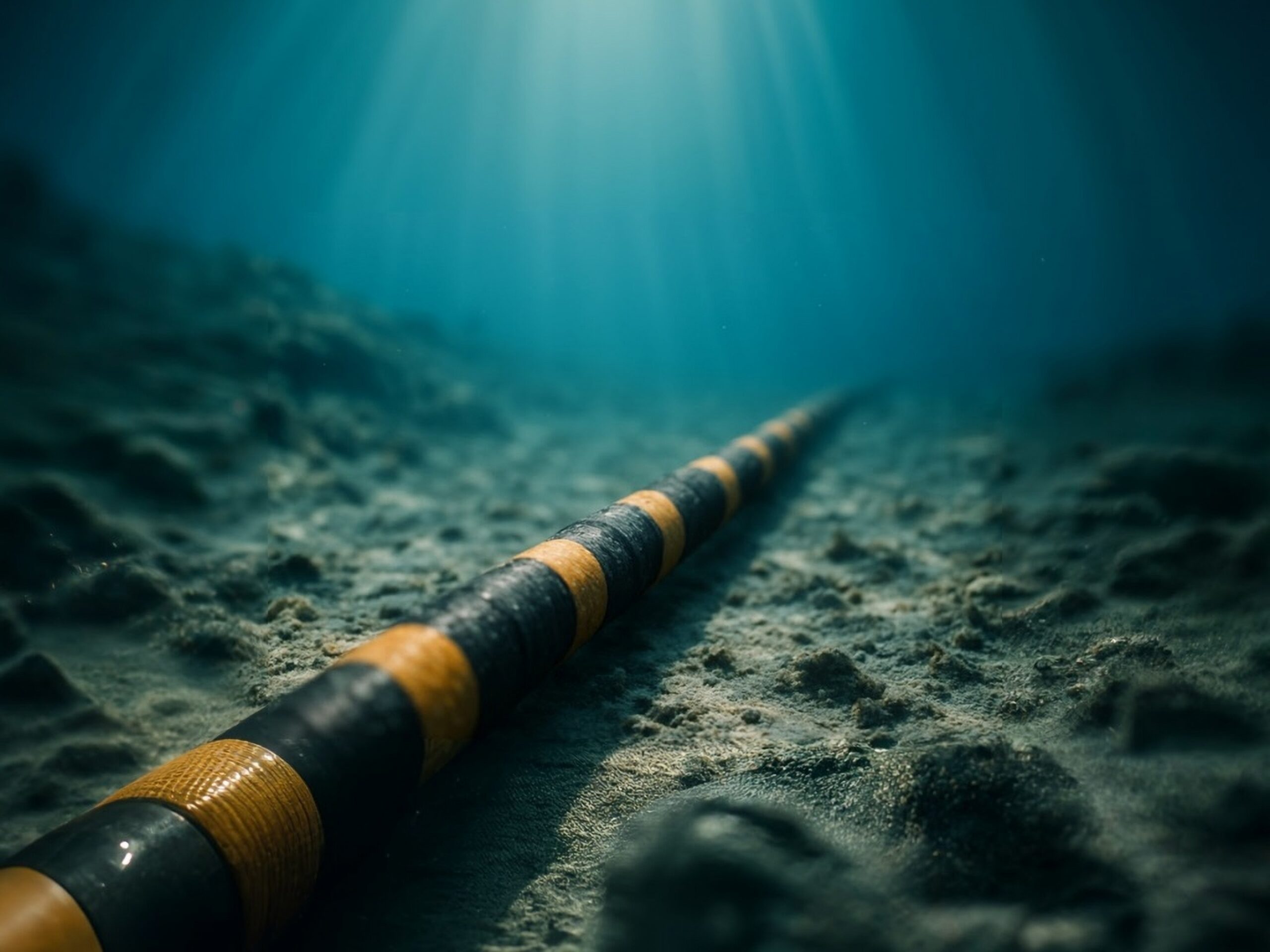
There are roughly 600 submarine cables spanning 1.5 million kilometers across the ocean floor. Rather than hardened military infrastructure, they’re precision-engineered strands of glass and steel no thicker than a garden hose, laid along routes optimized for efficiency, not survivability. In total, they carry about 99 percent of global internet traffic.
They work because, historically, no one has seriously tried to break them.
That assumption is now under strain.
The Strait of Hormuz, long understood as a strategic energy corridor, is an equally vital connectivity corridor.
Together with instability in the Red Sea, a dual chokepoint is emerging.
The UN’s Essential Coordination
While no single authority governs this vast undersea infrastructure, there is a system — diffuse, technical and largely invisible — that helps keep it running.
Since 2021, the International Maritime Organization has been spearheading what may be one of the most strategically important initiatives in the region: the Red Sea Project, originally slated to run through 2026.
Along with regional partners, it focuses on Djibouti, Ethiopia, Somalia, Sudan and Yemen — the exact geography where the world’s busiest shipping lanes intersect with one of its most critical data thoroughfares. Not coincidentally, it’s also where geopolitics is at its most volatile.
On paper, the project is about maritime security. In practice, it’s about system stability and what IMO calls a “whole of government” approach. That’s why the project includes UN Office on Drugs and Crime (UNODC) and INTERPOL.
Then there’s targeted training and implementation IMO leads within the International Ship and Port Facility Security (ISPS) Code — a post-9/11 framework under the SOLAS convention — to reduce risks.
Maritime Domain Awareness
The IMO’s core concept here is Maritime Domain Awareness — a term that sounds technical, but boils down to visibility.
Where are ships and cables? What’s moving? What could go wrong?
Since it’s a lot to keep track of (pre-war, for example, the Strait of Hormuz had about 140 commercial ships passing through its waters daily), information is shared through national and regional systems — essentially maritime air traffic control — known as National Maritime Information Sharing Centers. These allow authorities to anticipate incidents before they escalate.
The U.S. stood up its own version, NMIO, in 2009, and relies on IMO to help regional partners maintain quality control.
Enter Telecommunications
If the IMO helps manage physical risk above the water, the International Telecommunication Union works the problem from below.
ITU — led by American Doreen Bogdan-Martin — sets the technical standards that allow networks to connect across borders. It convenes governments and private companies to agree on how infrastructure is protected, maintained and repaired.
In a prescient move in 2024, ITU established the International Advisory Body for Submarine Cable Resilience in partnership with the International Cable Protection Committee (ICPC). The goal is straightforward: get governments, industry and technical experts aligned on how to prevent disruptions, and how to respond when they inevitably happen.
Notably, the group held its second submarine cable resilience conference just weeks before conflict in the Middle East began, a timely reminder of how theoretical risks are quickly becoming operational ones.
Legal Architecture the World Relies On
Beneath all of this is a legal framework that predates the internet itself.
The 1884 Paris Convention made it a punishable offense to damage submarine cables. The 1958 Geneva Conventions reinforced the right to lay them. The 1982 UN Convention on the Law of the Sea (UNCLOS) clarified how states can regulate cables without obstructing global connectivity.
And while it’s the kind of reading that makes even policy wonks reach for a second cup of coffee, it’s also the glue holding the whole system together.