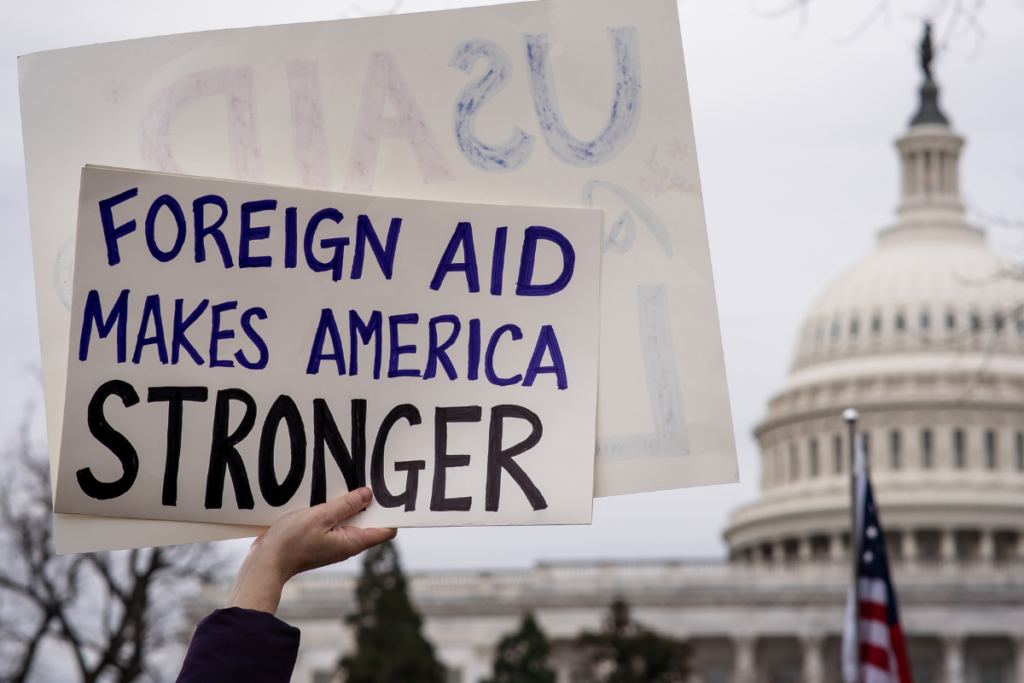
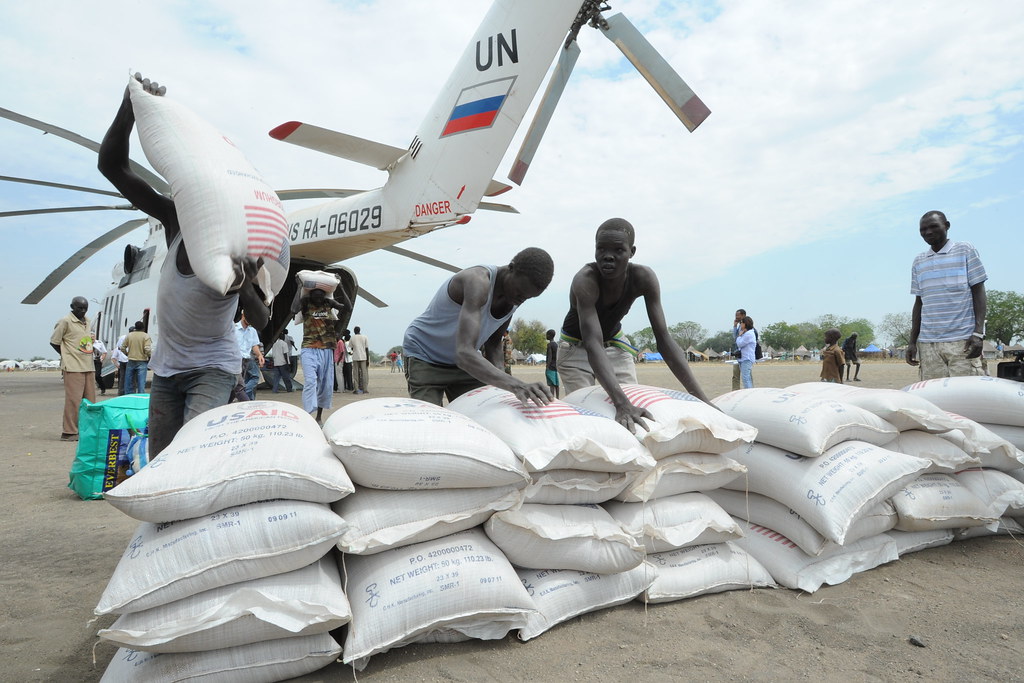
As 2025 comes to a close, the United States’ $2 billion pledge for United Nations humanitarian assistance underscores America’s continued leadership at a moment of extraordinary global need.
Reached through the Trump Administration and the UN Office for the Coordination of Humanitarian Affairs (OCHA), the agreement pairs diplomatic engagement with expectations for improved effectiveness and accountability, while ensuring life-saving assistance continues to reach those most in need.
OCHA Chief Tom Fletcher welcomed the achievement, saying, “At a moment of immense global strain, the United States is demonstrating that it is a humanitarian superpower, offering hope to people who have lost everything.”
“At a moment of immense global strain, the United States is demonstrating that it is a humanitarian superpower, offering hope to people who have lost everything.”
Tom Fletcher, Under-Secretary-General for Humanitarian Affairs and Emergency Relief Coordinator, OCHA
At a joint press conference in Geneva to announce the measure, senior U.S. State Department official Jeremy Lewin said, “This is the U.S. and UN working together,” calling it “a first step in a very needed structural change that’s going to allow the UN to deliver on its incredible promise in a new and better way.”
“This is the U.S. and UN working together.”
Jeremy Lewin, Under-Secretary for Foreign Assistance, Humanitarian Affairs and Religious Freedom
Speaking on CNN in an interview shortly after the press conference, Peter Yeo, President of the Better World Campaign, described the agreement as “an initial down payment” to U.S. partnership with the UN’s in hotspots such as Yemen, Sudan and the Democratic Republic of the Congo.
“The U.S. has long been the world’s most generous humanitarian donor, and we appreciate the Administration’s commitment to maintaining that leadership,” said Yeo.
That reality was acknowledged at the Geneva press conference. Lewin emphasized that the pledge should be understood as a starting point, not an endpoint.
“This $2 billion is not the end,” Lewin said. “It is an initial anchor commitment. We see this as a floor, not a ceiling – the beginning of what we hope will be a longer-term partnership.”
“We see this as a floor, not a ceiling – the beginning of what we hope will be a longer-term partnership.”
BWC also recognizes the role of U.S. Ambassador to the UN Michael Waltz in sustaining engagement with the UN, reinforcing U.S. participation in the mechanisms that shape how aid is delivered.
A Down Payment on Peace
Fletcher warns, however, that even with reforms, humanitarian actors are being forced to “hyper-prioritize” as needs outpace available resources. “We are understaffed and underfunded,” he said, describing a system under strain but capable of reform. “What really matters here is that millions of lives will be saved across 17 countries.”
This moment also highlights a broader strategic reality: humanitarian assistance does not operate in isolation. At the press conference, Lewin stressed that aid delivery must be linked to diplomacy and conflict resolution.
“Too often, we focus only on delivering aid,” he said. “But what ultimately reduces humanitarian need is peacemaking. The greatest humanitarian impact comes from ending conflicts.”
“What ultimately reduces humanitarian need is peacemaking. The greatest humanitarian impact comes from ending conflicts.”
“Humanitarian aid is a moral responsibility,” Yeo said in the CNN interview. “Ultimately it’s in America’s long-term interest.” Allowing humanitarian crises to go unaided, he warned, “poses downstream risks” to U.S. national security and to the safety of Americans.
That is why predictable and reliable support for assessed contributions, peacekeeping and other core UN functions remains central to effective humanitarian outcomes.
As it stands, the U.S. has not made regular budget payments for 2024 or 2025 and provided only 20% of its assessed peacekeeping payments.
As Fletcher noted in Geneva, “Nothing will do more to bring down the numbers of people in need than diplomacy and peacemaking,” supported by humanitarian systems that are efficient, accountable and properly resourced.
BWC welcomes the U.S. humanitarian pledge as a positive demonstration of American leadership and constructive engagement.
“This agreement moves us in the right direction,” Yeo said. “The next challenge is ensuring that the full UN system – humanitarian, peacekeeping and diplomatic – is resourced and aligned to meet the realities of today’s world.”
“The next challenge is ensuring that the full UN system – humanitarian, peacekeeping and diplomatic – is resourced and aligned to meet the realities of today’s world.”
Peter Yeo, President, Better World Campaign