2025 was a stress test for multilateralism. Engagement narrowed, budgets shrank and cooperation became more conditional. Even so, moments of real progress gave hope – reminders that the system still delivers when it matters most.
Here are nine moments from a memorable year.
1. Foreign Assistance Froze and USAID Ended.
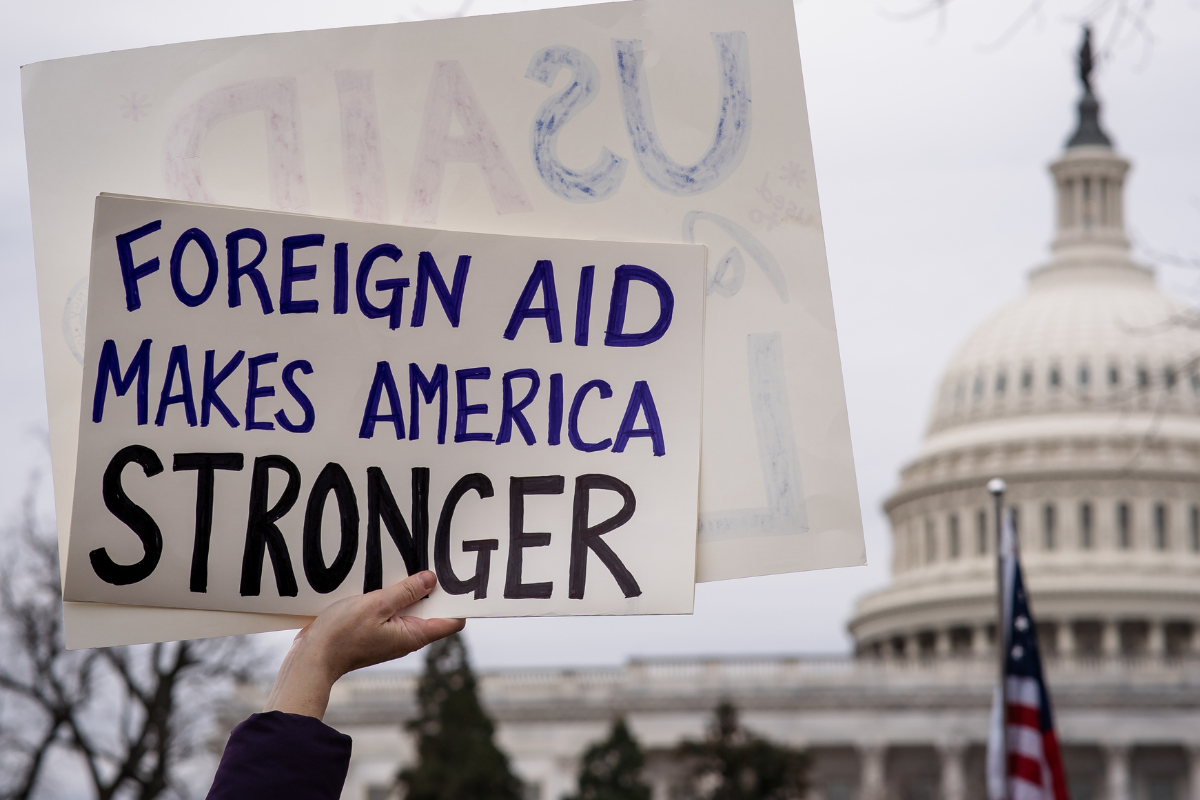
Days into President Trump’s second term, U.S. foreign assistance was abruptly halted. While the fate of programs hung somewhere between speedy 90-day reviews and more comprehensive (still unreleased) multilateral aid reviews, USAID was busy shuttering its doors after 64 years at the forefront of lifesaving work. Funding pipelines dried up overnight, leaving partners and the people they serve in jeopardy.
A wave of executive actions soon followed. Global health and development programs were paused or cut. The Global Gag Rule returned. Even PEPFAR, long treated as politically sacrosanct, was dragged into domestic culture battles. The signal was clear: traditional development was out; transactional engagement was in.
2. Congress Cut the Foreign Affairs Budget.
If the Administration set the tone, Congress delivered the blow. A $9 billion rescissions package slashed U.S. funding for the UN and international organizations, zeroing out support for WHO and driving U.S. peacekeeping arrears past the $1.5 billion mark.
Proposals to cut peacekeeping by more than half and eliminate voluntary funding for agencies like the UN Development Programme (UNDP) and the Office of the High Commissioner of Human Rights (OHCHR) deepened the crisis. By late summer, a legally dubious round of pocket rescissions sought to claw back another $1 billion before the fiscal year ended.
The cuts left the UN cash-strapped, forcing plans for an austere 2026 budget and major staffing cuts. By year’s end, the 80th UN General Assembly convened under a cloud of fiscal crisis, raising fundamental questions about America’s role in the system it heavily supports – and relies on.
3. New Leadership Took the Helm of U.S. Foreign Policy.
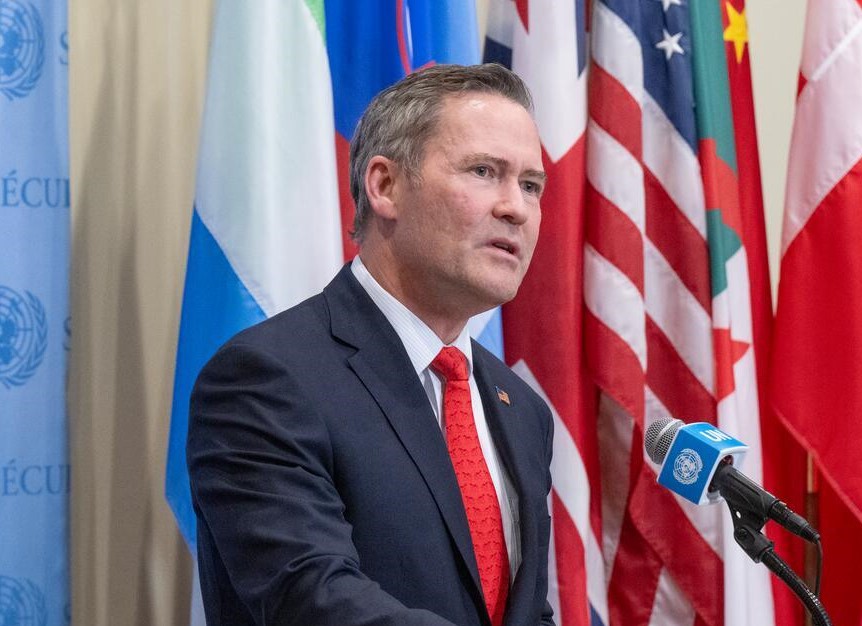
Secretary of State Marco Rubio and U.S. Ambassador to the UN Mike Waltz stepped into office at a moment of retrenchment and rising global risk. Rubio brought a long-standing focus on China, migration and the Western Hemisphere into the role. Former Green Beret Waltz arrived with a security lens shaped by an emphasis on deterrence and burden-sharing.
Together, they’re reinforcing a results-driven approach to engagement – demanding more bottom-line outputs from institutions like the UN while remaining more than eager to use them when scale and legitimacy matter. Gaza and Haiti were early tests of that balance.
4. The UN Turned 80 – and Cut Budgets, Not Cake.
This year’s UN General Assembly felt more like triage than jubilation. Instead of marking the milestone with ceremony, Secretary-General António Guterres used the moment to brief Member States on UN80 – an ambitious reform effort launched earlier in the year to make the organization leaner and more effective.
Reform includes historic cuts to the core budget – 15 percent (about $577 million) in FY26 – and eliminates one in five posts through back-office consolidation. Separately, major peacekeeping troop drawdowns are already underway. Whether these reforms succeed hinges on political will.
As UN80 moves from blueprint to execution, the United States – long an advocate and architect of reform – will determine whether this moment delivers results or slips away.
5. Hostages were Released as Hope for Resolution – and Aid – Reached Gaza.
In November, Washington made one of the year’s most consequential diplomatic breakthroughs. Ending months of paralysis over the Israel-Hamas war, the UN Security Council adopted a U.S.-drafted resolution on Gaza. The measure passed 13-0, with Russia and China abstaining. This followed the release of Israeli hostages by Hamas and a fragile pause in fighting – briefly opening space for diplomacy to reassert itself.
The resolution embedded President Trump’s 20-point plan in a UN framework. It called for the resumption of humanitarian aid, authorizes a temporary international governing authority to oversee reconstruction and approves a multinational stabilization force as Israeli forces withdraw. The text also cautiously points toward a longer-term political horizon beyond the immediate crisis.
6. Syria’s Post-Assad Future Now Looks to International Support.
Syria’s political map shifted in 2025, opening a narrow but vital window. One year after Bashar al-Assad fled to Russia, a fragile transitional government under President Ahmad al-Sharaa – who delivered an historic speech to the UN General Assembly before visiting the White House – forced Washington to reassess whether sanctions designed for a fallen regime risked prolonging instability.
Congress is set to settle the question by repealing Caesar Act sanctions, clearing space for engagement and signaling that isolation risked ceding Syria to Iran and Russia. The UN emerged as the channel for cautious rebuilding, scaling aid, clearing landmines and laying early groundwork for reconstruction oversight as refugees weighed return.
Nevertheless, with costs exceeding $200 billion, the risks remain high.
7. Haiti Became a Proving Ground for a New Security Model.
As gang violence spiraled and state authority collapsed, Washington pushed a Security Council resolution to overhaul the international response to violence in Haiti, replacing a faltering mission with a UN-authorized Gang Suppression Force.
For the U.S., instability in Haiti is not a distant humanitarian crisis but an immediate security concern, with migration pressure and regional security lending added urgency to the effort.
8. Sudan Reached its Nadir
As attention fixed on Gaza and Ukraine, Sudan slipped into the world’s worst hunger crisis. Famine was declared across multiple regions, millions were displaced and humanitarian access collapsed amid fighting between rival generals. With funding drying up and donor focus drifting, the gap between needs and capacity widened daily.
For Washington, the crisis exposed the limits of restraint. Long Sudan’s largest humanitarian donor, the United States scaled back contributions amid a broader foreign-aid freeze, pairing diplomatic statements with little appetite for deeper engagement.
Sudan became one of 2025’s darkest lessons: without sustained political will and adequate funding, even the UN’s largest humanitarian machinery cannot keep pace.
9. “America First” was Codified.
December’s National Security Strategy formalized what 2025 had already revealed in practice.
The document rejected broad-based engagement in favor of a narrower definition of U.S. national interest. Prevention and long-term institution-building gave way to demands for immediate results tied directly to U.S. priorities. Agencies focused on migration management, sanctions enforcement, counter-narcotics and security cooperation rose in prominence, while those centered on human rights, development and governance receded.
Yet the NSS stopped short of rejecting multilateralism. In fact, Gaza and Haiti offered proof of the strategy’s internal tension: even as funding contracted and rhetoric hardened, Washington still turned to the UN when legitimacy and risk-sharing were indispensable.
Looking Ahead to 2026: An Inflection Point More Than a Reset
If 2025 marked a contraction in U.S.-UN relations, 2026 will test whether the relationship stabilizes or hardens.
New security missions move from mandate to reality, budget politics remain volatile and the United States will host the G20 even as it questions multilateralism. Even the World Cup is already taking on diplomatic weight, with visa restrictions and domestic tensions threatening to turn a global celebration into a political flashpoint.
Policy signals point toward a narrower, more transactional approach. Culture wars may further constrain cooperation, while Washington’s influence over the upcoming Secretary-General election is likely to favor managerial restraint over aspirational vision.
Operationally, 2026 will be unforgiving. Gaza and Haiti will test whether UN-authorized, burden-sharing security models can deliver results with U.S. financing and diplomacy rather than troops. Peacekeeping faces the same strain: doing less without leaving dangerous vacuums behind.
There will be no return to the multilateralism of the past.
The question is whether a leaner U.S.-UN relationship can still deliver when stakes are highest.