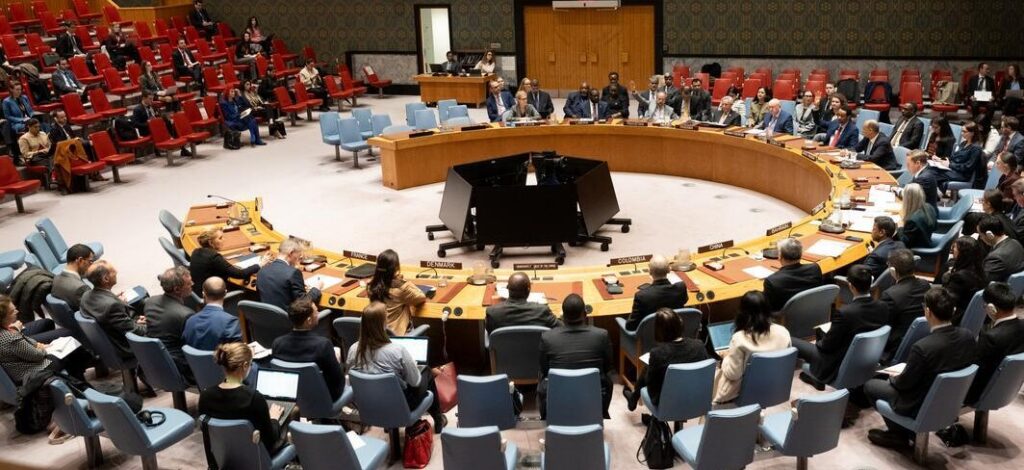
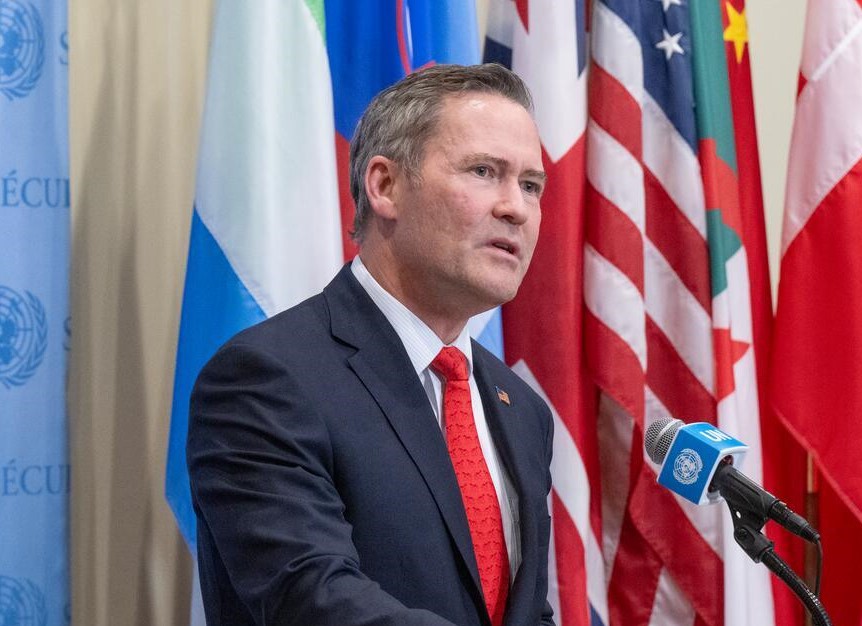
In his first appearance before Congress since taking the helm, Mike Waltz, U.S. Ambassador to the United Nations, delivered a strong message: the UN is in need of reform — and American leadership is essential to getting it there.
“I tell my colleagues at the UN all the time: Congress is watching very closely,” Waltz told lawmakers at the House Appropriations subcommittee on National Security, Department of State, and Related Programs hearing on Friday, March 20.
“The UN needs to get back to basics — maintaining international peace and security.”
That “back to basics” framing defined the hearing, as did the recognition across party lines that walking away from the UN is not an option.
Ranking Member Lois Frankel stressed that the institution “plays a vital role in advancing global stability and U.S. foreign policy priorities,” warning that “cuts in funding and delays in payments to the UN system… cedes influence to our adversaries and complicates our ability to advance U.S. priorities.”
She added, “Predictable and timely contributions are essential to maintaining our credibility [and] sustaining critical operations.”
Rep. Rosa DeLauro echoed Rep. Frankel’s remarks, stating, “Our investment in the UN is an investment in our national security.”
Historic UN Reform
On the topic of reform, Chairman Mario Diaz-Balart underscored that, “The United Nations has great potential, and we are already seeing notable results from reform efforts underway,” a point that was reinforced from both sides of the aisle.
“The United Nations has great potential, and we are already seeing notable results from reform efforts underway.”
Mario Diaz-Balart
Over the past year, the U.S. has pressed for what Waltz described as “historic” changes to how the UN operates. “We led Member States to achieve a 15 percent cut — $570 million — to the UN’s regular budget,” he said. “That will eliminate nearly 3,000 headquarters positions and reduce the U.S. contribution by $126 million.”
In the humanitarian space, the push has been toward coordination over fragmentation. “We’ve pooled funding through OCHA to eliminate duplication,” Waltz explained. “That empowers regional coordinators to actually manage the system on the ground.”
Peace through Strength
Waltz also made a case that UN reform is not charity, but strategy.
“Where girls are educated and women are fully participating in society, countries are much more stable,” he said. “That means fewer U.S. troops abroad.”
“Where girls are educated and women are fully participating in society, countries are much more stable,” he said. “That means fewer U.S. troops abroad.”
Mike Waltz
It’s a point that resonated across the aisle and aligns a national security worldview.
Rep. Norma Torres agreed, “Foreign assistance programs… are frontline tools that reduce violent extremism, prevent dangerous drugs and protect our health from pandemics. Walking away from UN is not a show of strength, it is a strategic mistake.”
Waltz argued for doing it smarter. “We’re trying to pull in private sector investment. We call trade over aid.”
Winning at the UN
Underlying the discussion was also the reality that if the U.S. steps back, others will step in.
“China has very aggressively leveraged their funding with demands in terms of positions,” Waltz cautioned. “In some of these organizations,” he said, “we just have to get in and fight — and win.”
That starts with showing up. “We’re prioritizing qualified Americans in UN leadership,” he said. “We need to do more, even at the junior level.”
This is competition for leadership roles is currently playing out across the UN system. American Doreen Bogdan-Martin, who currently serves as Secretary-General of the International Telecommunication Union, is up for re-election this year.
Reform Requires Engagement
Ultimately, there was broad recognition in the room that U.S. leadership at the UN matters.
As Rep. DeLauro put it, the UN remains the “single largest and most effective organization devoted to global peace.” Ranking Member Frankel called it “a unique forum… where everyone comes together to talk,” stressing that “we will be most effective when we lead.”
It’s a view long championed by Better World Campaign President Peter Yeo: “You don’t fix the system by walking away from it. You fix it by leading it.”
Waltz agrees. “As President Trump said, the UN has tremendous potential. My charge… is to help it realize that potential.”
“You don’t fix the system by walking away from it. You fix it by leading it.”
Peter Yeo