As 2025 came to a close, the U.S. and the United Nations announced a $2 billion humanitarian assistance partnership with the potential to reshape how America delivers life-saving aid to millions of people worldwide.
The announcement followed a turbulent year for the humanitarian community. An Executive Order paused most U.S. foreign assistance, while Congress moved to claw back funding and lawmakers sought greater oversight of aid programs.
Among issues at the center of those discussions was the need to protect the integrity of aid delivery, particularly the risk of so-called “aid diversion” – when money, food or supplies are intercepted by armed groups or diverted from their intended recipients.
Diversion poses serious strategic and humanitarian risks. When assistance is stolen or misused, it can prolong conflict, finance violence and deprive vulnerable communities of the support they urgently need.
With the UN responsible for delivering assistance in the world’s most complex environments, a critical question emerges: how is the UN system strengthening safeguards to mitigate diversion and ensure that U.S.-supported humanitarian aid reaches those it is intended to help?
OCHA: The UN’s Coordination Hub
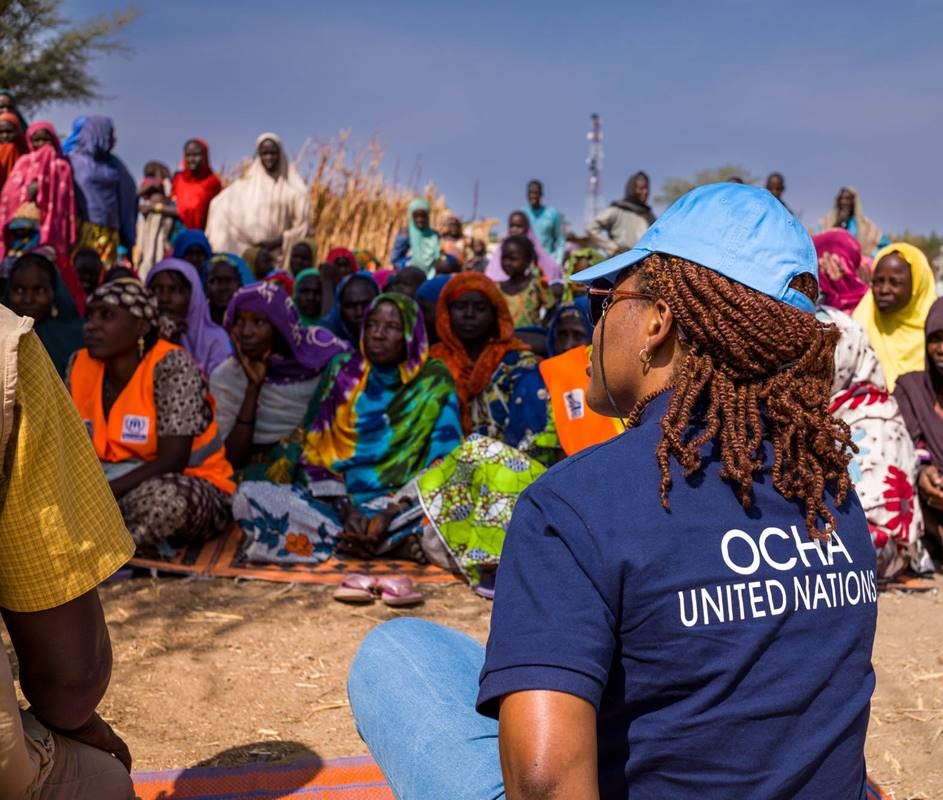
The UN Office for the Coordination of Humanitarian Affairs (OCHA) sits at the center of these efforts. OCHA supports UN agencies and more than 1,500 humanitarian partners in delivering aid to people in crisis worldwide. Today, humanitarian needs are estimated to exceed 300 million people, even as resources are projected to reach less than two-thirds of those. Ensuring aid is delivered transparently, efficiently and without diversion is core to its mandate.
That work begins well before aid reaches the ground. Ahead of deployment, OCHA relies on analysts from fields as diverse as logistics and health to procurement and even unexploded ordnance safety, to conduct extensive country-specific risk assessments, flagging threats like how robberies or natural disasters could block delivery. These assessments provide a roadmap for the planning of safe, accountable aid distribution.
OCHA’s planning does more than improve the odds of successful deliveries by UN agencies – it strengthens the entire humanitarian ecosystem, including the trusted local partners who are often the real heroes of this work. By sharing metadata with community-based organizations, and in turn receiving hyperlocal insights from those on the ground, OCHA helps bridge global oversight with lived, local knowledge. The result is a smarter, more responsive humanitarian system – one that delivers aid more effectively because it is informed by the communities it serves.
OCHA’s planning does more than improve the odds of successful deliveries by UN agencies – it strengthens the entire humanitarian ecosystem.
Accountability at Every Step
To move plans from paper to practice, OCHA tracks aid from transport through post-delivery. Tools such as biometric identification, fixed delivery schedules and third-party oversight provide near real-time visibility into where assistance is and whether disruptions are occurring. This includes cutting-edge satellite tracking in partnership with UN Satellite Centre (UNOSAT).
Post-distribution, where much interception often occurs, includes individual survey and feedback mechanisms that help verify that aid reached intended recipients, as well as independent audits by the UN Office of Internal Oversight Services and implementing partners inside and outside the UN system. For cash programs, analysis of local market activity offers an added check on how funds are spent to see how assistance is circulating back into the community and what goods are in demand.
Together, these guardrails allow cash assistance to move quickly and flexibly while maintaining strong protections against diversion. (For more on cash assistance, read our latest on the rise of cryptocurrency in aid delivery.)
Bonus: some of OCHA’s tracking dashboards and maps are also open-source, adding an extra layer of transparency to the system.
Safeguards
When major issues do occur, OCHA pauses operations immediately and launches an investigation in coordination with local and regional authorities.
Diversion is treated as seriously as any obstruction to humanitarian access because it strikes at a core UN principle: neutrality. Deliberate attacks on aid workers, denial of access to civilian populations and, yes, diversion of assistance by any actor all trigger the same response – pause, assess and investigate.
Aid resumes only after partners on the ground demonstrate that strict compliance criteria have been met and that the conditions enabling diversion are no longer present. This process protects future deliveries and strengthens OCHA’s planning and risk management for operations ahead. It also bolsters trust of local populations that keeps humanitarian workers safe so they can keep doing the good work of keeping civilians safe.
Trusted Results
In 2024, OCHA ranked first among UN entities in the global Aid Transparency Index and fourth overall among all aid organizations worldwide. That achievement is notable for any institution – let alone one coordinating relief across the world’s most dangerous crises, with more than 1,000 NGOs on its roster, amid shrinking budgets and record humanitarian need.
And it helps explain why, as the U.S. reassessed how it delivers humanitarian assistance, it turned to OCHA: an organization built to manage complexity, enforce accountability and deliver aid with the transparency and integrity American taxpayers expect.