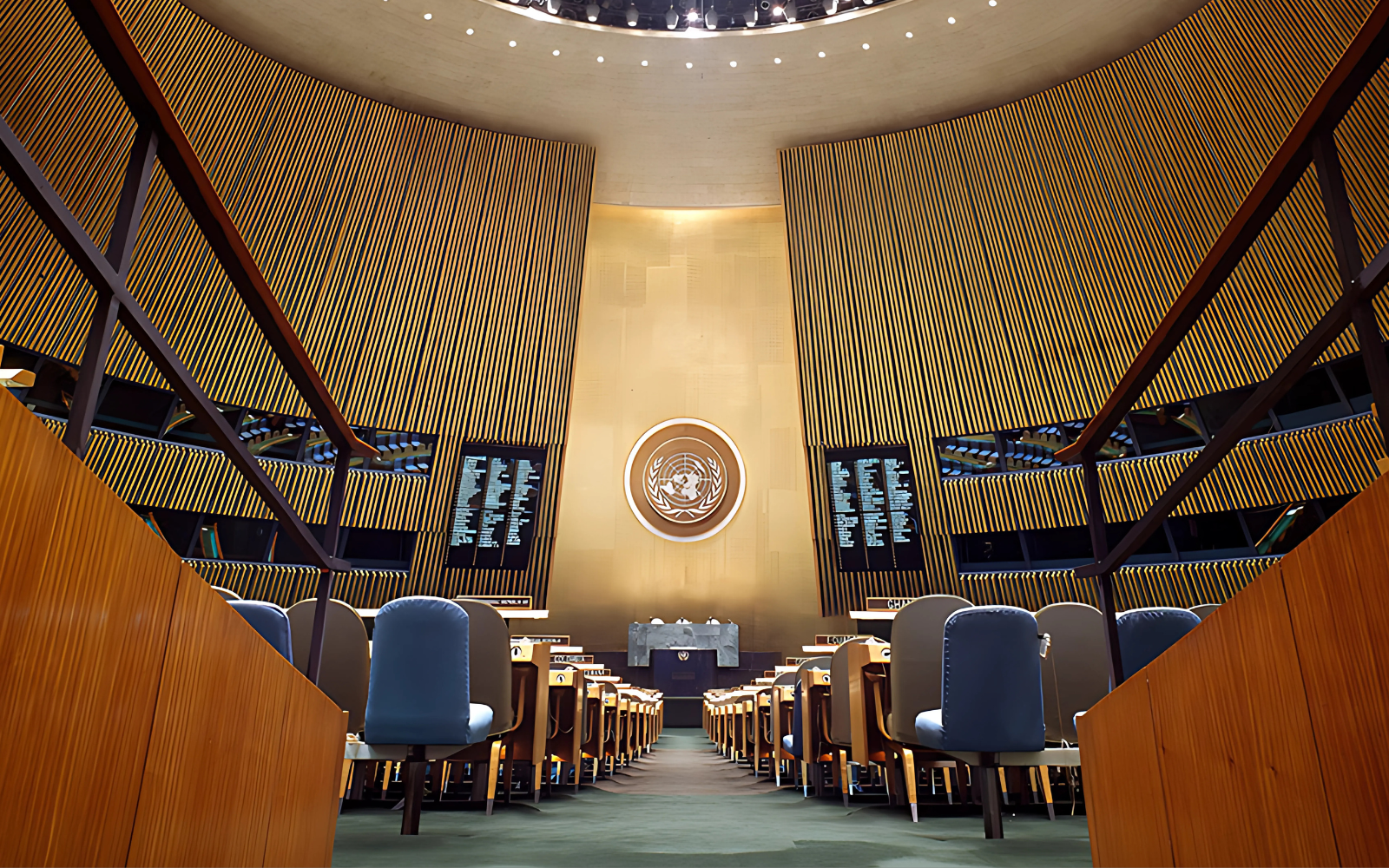
In late January, The New York Times reported that the United Nations is facing “imminent financial collapse,” with the organization warning it could run out of cash by July if Member States fail to meet their annual assessed dues.
That warning has drawn headlines.
Here are four notable lines from the reporting, and why lawmakers should be paying attention.
“The United States is responsible for about 95 percent of the money owed to the United Nations.”
This figure reflects unpaid assessed regular budget contributions, not voluntary aid – a distinction often lost in public debate. At present, U.S. debt to the UN exceeds $2.2 billion. The second-largest debtor, Venezuela, owes $38 million.
Assessed dues are legal obligations the U.S. negotiated, agreed to and has reaffirmed year after year through bipartisan appropriations. When the U.S. does not pay, it does not “send a message”; it racks up debt and reneges on a promise that almost every other country keeps.
Those arrears come with consequences: crippling the UN’s ability to fund programs we support, diminishes leverage in negotiations, weakens credibility when pressing reforms and limits access to key leadership appointments. The result is less U.S. influence at higher strategic cost and more ammunition to countries like China – precisely the opposite of what Congress has long sought.
Of note, the bipartisan SFOPS/NSRP spending bills recently passed by Congress and awaiting final action provide full funding for the FY26 UN regular budget. This funding, however, does not address existing arrears.
“I cannot overstate the urgency of the situation we now face.”
– António Guterres, Secretary-General of the United Nations
UN funding warnings are not new, which is partly why they are often dismissed. There is rarely a year in which a Secretary-General doesn’t punctuate an annual address with messages about “rising crises and diminishing resources.”
What is different now is the timeline. This is not about trimming programs or slowing hiring – steps the UN took throughout 2025 and in the 2026 UN regular budget in what it describes as the most aggressive reform and cost-cutting effort in its history. If major arrears remain unpaid, the UN will be unable to meet payroll and vendor obligations by July.
A cash-out scenario would immediately disrupt Security Council operations, sanctions enforcement, mediation efforts, political missions and humanitarian coordination – all tools the U.S. relies on to manage crises without deploying American forces. This is not abstract multilateralism; it is day-to-day burden-sharing.
“Annual UN dues are mandatory and set according to a country’s gross national income.”
The assessed contributions system reflects a formula the United States helped design to ensure predictable financing and shared responsibility across all Member States, rather than being the primary responsibility of a single country. While the U.S. may choose to pull back voluntary assistance to reflect budget concerns or ideological preferences, which we have done in recent months, our membership fee is set as a fair share of costs. In fact, that fairness is one reason why successive Administrations have supported the model because it ensures other countries step up.
Failure to pay assessed dues exposes the U.S. to reputational damage and, over time, procedural consequences – including the risk of losing voting rights in the General Assembly. The reality is that any large organization needs stability and predictability in its budget.
“We do not have the sort of cash reserves and the sort of liquidity to keep functioning, as we’ve done in previous years… When it comes to paying, it’s now or never.”
– Farhan Haq, a spokesman for the United Nations
This is as close as the UN comes to issuing a final warning. Unlike past budget crunches when the UN dipped into savings, there are no remaining reserves to bridge the gap. A shutdown would ripple across diplomacy, peacekeeping, treaty implementation and humanitarian coordination. Even UN agencies with separate, voluntary budgets (including UN humanitarian agencies like the World Food Programme, UNICEF and UN Refugee Agency) depend on a functioning Secretariat to operate effectively.
As analysts at the International Crisis Group warned in the Times piece, once core systems collapse, staff morale, institutional memory and field operations degrade rapidly – and restoring them is neither quick nor cheap.
Reform Done Right
This is not a debate about whether the UN should reform. The UN supports reform and underwent real and dramatic cost-cutting this year.
But reform is not simply slashing costs. It means honoring our commitment to pay and standing by investments that have long been in our national interest.