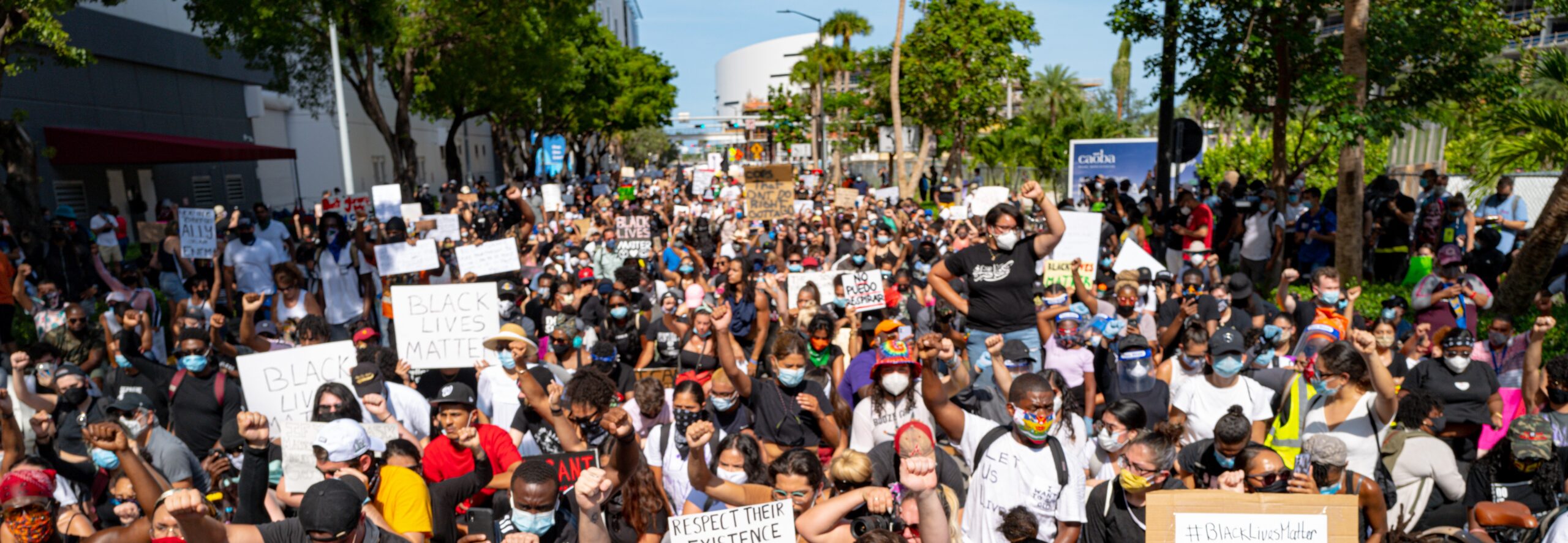
In late January, dozens of Minnesota-based companies, including some of the nation’s largest employers, signed an open letter calling for cooperation to ease rising tensions following a sweeping federal immigration enforcement operation that led to tragic loss of life and sparked protests in Minneapolis and beyond.
There are many policy debates best left outside the boardroom; this one is demanding C-suite attention. As boycotts shutter stores and revenue stalls amid the unrest, business leaders are confronting a question increasingly difficult to ignore: How do companies approach human rights?
Business leaders are confronting a question increasingly difficult to ignore: How do companies approach human rights?
Because the answer, it turns out, has both moral – and financial – consequences.
While the United Nations may seem far removed from the challenges facing the Twin Cities business community, it turns out this issue falls squarely within the mandate of a little-known UN office that has been grappling with it for more than two decades.
Beyond ‘Corporate Responsibility’
American companies have historically resisted the language of human rights, preferring the softer vocabulary of corporate social responsibility (CSR) or business ethics. But as U.S. businesses are learning in real time, human rights are not an adjacent concern – something addressed in an annual report or through a charitable gift. Rather, they are a core operational issue reflected in employee safety, litigation risk, supply chain disruption and investor scrutiny.
“Corporate social responsibility is discretionary and top-down,” says Nina Gardner, a longtime adviser to the UN and multinational companies. She notes that CSR programs often expand in good years and disappear in bad. A human rights approach, however, forces executives to think about impact. “It’s about where harm is actually happening,” Gardner says. “When executives see the impact of their actions – or often worse, inactions.” She adds, “Thinking through the lens of human rights is a fundamentally different framing.”
The Global Baseline
That framing is what the UN Guiding Principles on Business and Human Rights (UNGPs) were designed to provide. Adopted by the UN Human Rights Council in 2011, the principles act as a kind of global gold standard for how companies should address employee rights.
“Almost no document, no decision of the Human Rights Council is ever endorsed unanimously,” said Mauricio Lazala, who leads this work through the Office of the High Commissioner for Human Rights (OHCHR). “This one was. That says something.”
Effectively, the UNGPs can function as an early warning system for companies, helping businesses identify problems – whether in a sweatshop in Southeast Asia or a mine in Sub-Saharan Africa – before they escalate into protests, lawsuits or outright crises. They formulate steps to develop policies and safeguards to identify and mitigate those risks, protecting both their brands and their employees.
The UN Guiding Principles on Business and Human Rights functions as an early warning system, helping businesses… mitigate risks, protecting both their brands and their employees.
From Quiet Nudging to Public Outcry
Much of the UN’s work in this space is deliberately under the radar. OHCHR offers technical guidance, advising governments on effective legislation, engaging judges on appropriate remedies when issues arise and helping business associations build accountable systems.
Of the tools they offer, one of the newest, most valuable has been the launch of OHCHR’s confidential Business and Human Rights Helpdesk, which answers practical questions companies rarely ask in public: How should we handle tax payments in Russia during the war in Ukraine? What are companies required to do when asked to relinquish personal employee data? Companies get expert answers from professionals with the hard-won wisdom and experience navigating those challenging waters.
OHCHR’s free, confidential Business and Human Rights Helpdesk answers practical questions companies rarely ask in public.
The Helpdesk is also free and open to states, civil society organizations and others grappling with the same thorny issues.
And then there are the services that the office provides to the public and investors interested in learning more about potential partners they may wish to engage. Following rigorous investigations, OHCHR provides information and databases identifying companies linked to unsavory business practices in conflict-affected, high-risk environments and elsewhere. If the helpdesk and the proactive UNGPs guidance to mitigate risk is the carrot, this serves as more of a stick.
“This negative publicity generates a lot of attention,” Lazala said. In corporate terms, “attention” can yield outcry from investors and customers, legal reviews and audits, all to ensure that companies are maintaining strong ethical standards. So while the UN has no enforcement power in the traditional sense, this reputational lever carries significant clout.
Filling the Void
The UN’s role supporting businesses has become more prominent as public resources traditionally dedicated to human rights and corporate oversight face growing pressure.
Jordyn Arndt, who spent eight years at the State Department focusing on the intersection of business and human rights, has observed this firsthand.
“In the last year, our entire office was cut,” she said, noting that much of bureau faced a similar fate. Unfortunately, the result is not only a dearth of support services directly to businesses, but an absence in American influence in international corporate sustainability and governance policy conversations that continue to move forward without the U.S. at the table.
Justin Hansford, a law professor at Howard University, underscores that this moment makes the UN framework all the more important as a global “North Star” for multinational companies operating in locations where legal requirements and consumer expectations for corporate behavior are greater, such as the European Union. UNGPs provide that roadmap to get started and maintain high standards.
A Framework for the Future
Which brings us back to Minneapolis – and the UN Guiding Principles.
The city’s employees and empty storefronts serve as a stark reminder that when the social fabric tears, the private sector is often first to feel the pull. For companies today, a human rights strategy is not just about ethics. It is about navigating the reality of the modern marketplace.
For companies today, a human rights strategy is not just about ethics. It is about navigating the reality of the modern marketplace.