At 2:00 a.m., Danielle Bell’s day began to the sound of explosions.
She was in Dnipro oblast conducting interviews with survivors and managing staff in a war now entering its fifth year. In the depths of winter, massive strikes on energy infrastructure have become common.
“We’re documenting large-scale attacks on a near-weekly basis,” Bell said. And no one – not children, not older persons, not displaced families – is immune.
Bell leads the UN Human Rights Monitoring Mission in Ukraine. The team tracks the war’s toll on civilians – from deaths and injuries to torture, executions, enforced disappearances, unlawful detention, sexual violence and strikes on energy and other civilian infrastructure. Their work is to document facts on the ground that support early warning, prevention and protection.
After four years of war and uncertainty over high-level talks, one thing remains certain: civilian harm is rising, torture in prisons remains systematic and widespread, and energy infrastructure is being weaponized against the population – all while global attention wanes.
For Bell and her team, the mission has never been more urgent.
Civilians Caught in the Crosshairs
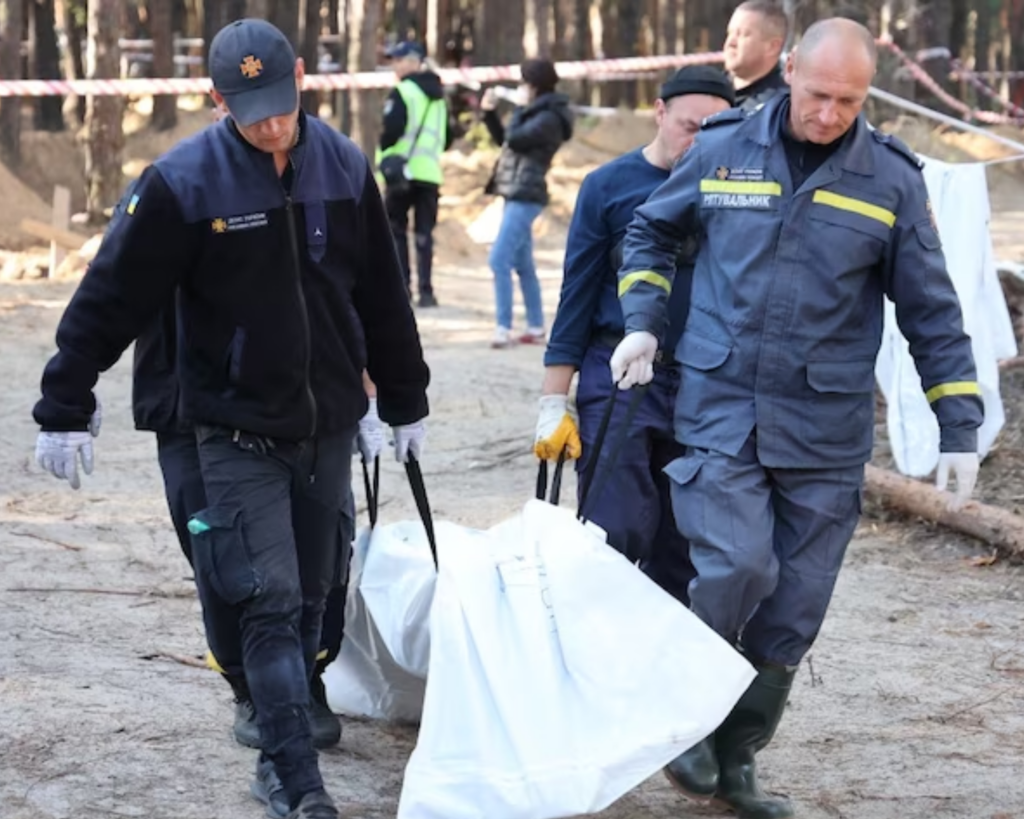
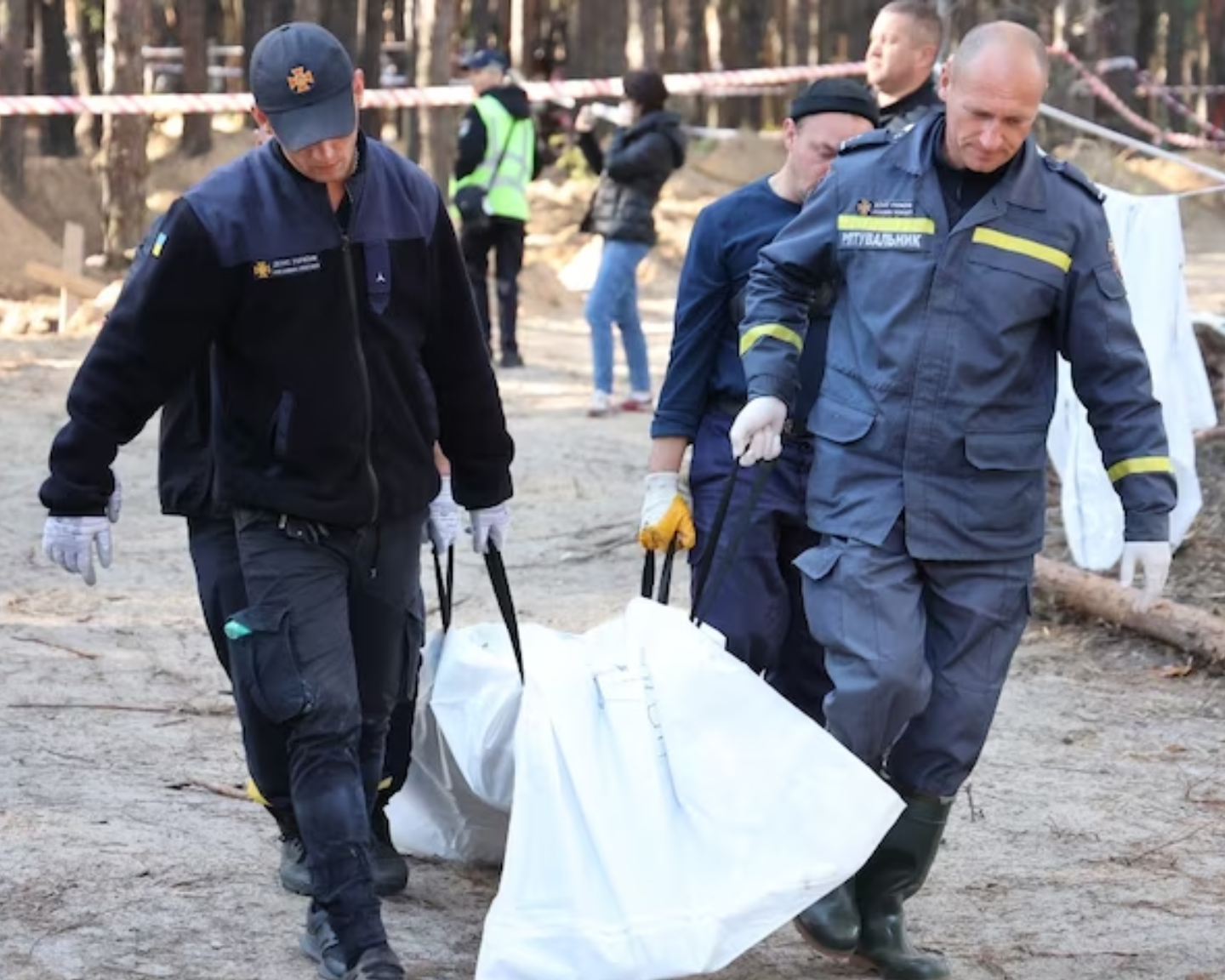
Since the first bombs dropped on February 24, 2022, UN monitors have verified more than 15,000 civilians killed and over 41,000 injured – including at least 750 children.
Conditions are worsening. Last year alone, more than 2,500 civilians were killed and roughly 12,000 injured – about 30 percent higher than 2024, and nearly 70 percent higher than 2023. Two-thirds of casualties occurred in frontline areas.
In 2025, short-range drones caused 121% more civilian casualties in frontline areas compared with 2024, contributing to a 30% overall rise in civilian harm. Drones are now the preferred weapon of both Russian and Ukrainian forces.
Older Ukrainians – who account for just a quarter of the overall population – represent about half of civilian deaths near the battlefront.
“Those who remain in frontline areas are overwhelmingly older persons, persons with disabilities and those without the means to flee,” Bell said after visiting a transit center that takes in about 120 displaced people each day.
“Most have very little money. Many are caregivers, older persons, persons with disabilities, persons with mental illness and people without families. Many do not want to leave the homes they have known all their lives,” she reflected.
Systemic Abuse and Detention
As of early February, Bell’s team has interviewed more than 1,000 individuals detained by Russia, including 725 released Ukrainian prisoners of war and over 300 civilian detainees. Ninety-six percent of POWs report torture or ill-treatment in captivity. Among civilian interviewees, 84 percent report torture.
96 percent of POWs report torture or ill-treatment in captivity. Among civilian interviewees, 84 percent report torture.
There have been at least 43 Ukrainian POW deaths in custody and 40 civilian detainee deaths, as well as 109 executions of Ukrainian soldiers. In areas under Russian control, at least 182 civilians are reported to have been executed.
She stresses that these are not isolated incidents or the actions of rogue soldiers, but a systematic pattern of abuse replicated across facilities. According to a December 2025 OHCHR report, Bell’s team has located 161 official sites used to detain Ukrainian civilians, including 73 inside the Russian Federation.
Bell, who previously investigated torture in Iraq, Afghanistan and Sudan, describes the scale and severity as “incomparable.” She added, “The scale, consistency and severity of the abuse we have documented across facilities in occupied territory is unlike any pattern I have seen after almost 25 years working in conflict and post-conflict contexts.”
“The scale, consistency and severity of abuse we have documented… is unlike any pattern I have seen after almost 25 years working in conflict.”
Danielle Bell
In what detainees call “admission procedures,” she described severe beatings, mock executions, forced nudity, electric shocks, sexual violence and prolonged stress positions. In some facilities, beatings are an almost daily occurrence. Inhumane conditions of detention have led some prisoners to lose about a third or even half their body weight.
Detailing a typical case, Bell recalled interviewing a detainee who was taken blindfolded for interrogation. Rather than being questioned, he was stripped, beaten and tased. His face was covered with plastic until he could no longer breathe. Guards then used a military field phone to administer electric shocks – first to his fingers, then to his genitals – while pulling out two of his fingernails.
Amendments to the Russian Federation’s Criminal Code adopted in 2024 and 2025 exempt service members – including commanding officers – from criminal liability for crimes including murder, torture and sexual violence.
When 96 percent of released Ukrainian POWs report torture, this points not to isolated misconduct but to a system in which abuse is institutionalized and carried out with confidence that no one will intervene.
Energy as a Battleground
While torture is targeted, attacks on energy infrastructure affect a much wider population.
Since October 2025, UN monitors have documented an intensified campaign against Ukraine’s energy grid. By January 2026, the country had lost more than half of its pre-war electricity generation capacity, leaving roughly 11 gigawatts available – far short of the 18 gigawatts needed during peak winter demand.
With the extended blackouts, some regions have access to electricity for only a few hours a day; in others, outages last for days at a time.
In January, strikes targeted district heating systems. In Kyiv alone, officials report tens of thousands of civilians left without heat for the remainder of the winter after energy cuts affected more than 1,100 multi-story residential buildings.
Under international humanitarian law, civilian infrastructure is protected from attacks. Deliberately targeting electricity and heating systems predictably harms the most vulnerable, including older people, people with disabilities and families trapped in high-rise apartments unable to escape when elevators fail.
“Targeting electricity and heating systems during sub-zero temperatures has disproportionate consequences for civilians who have limited means to protect themselves,” Bell stresses.
What’s more, many Ukrainians survive on roughly 5,000 hryvnias a month (about $120), making backup batteries and generators unattainable luxuries.
“We Will Not Let the World Forget”
Against this backdrop, Bell says the even greater challenge is fighting attention fatigue.
“The big risk as the four-year mark approaches,” she said, “is that the war and human suffering become normalized and that normalization erodes the urgency required to prevent further harm and ensure accountability.”
“The big risk as the four-year mark approaches is that the war and human suffering become normalized.”
Four years is a long time in Washington. New legislators arrive with new priorities and new line items. Meanwhile, torture continues – so do bombings and blackouts.
It’s clear that Bell bears the weariness of a realist whose job takes its toll. But she’s also surprisingly warm about some of the better parts of the day – caring for her team and making sure the small wins are celebrated.
She also sees extraordinary power in the purpose of OHCHR’s mission in Ukraine: to document and publicly report facts.
“When this war finally ends – and it will – the scars of survivors will remain,” she says. “Our responsibility is to ensure that the facts are preserved to support accountability processes – whether that happens soon or years from now. The record is clear and undeniable.”
Bell’s determination shines through, even as her electricity flickers and her attention is pulled back to the frontline: “We will not let the world forget.”
“When this war ends – and it will – the scars of survivors will remain… We will not let the world forget.”