The United Nations recently confirmed that more than 6,000 people were killed over three days when Sudan’s Rapid Support Forces seized the city of el-Fasher in North Darfur.
The UN Human Rights Office described the assault as “a wave of intense violence… shocking in its scale and brutality,” documenting mass executions, systematic sexual violence, abductions and the shelling of displacement camps and hospitals. Officials concluded that the actions amount to war crimes.
“A wave of intense violence [in Sudan was]… shocking in its scale and brutality.”
The violence is a sobering reminder of the desperate conditions in Sudan.
The report also adds fresh urgency to February’s push to reinforce the Sudan Humanitarian Fund – a fund in which the U.S. has just invested $200 million.
Commitments to a Country in Collapse
On February 3, the United States convened more than 20 donor governments at the Trump Institute of Peace to reignite international action around the Fund.
Funding commitments – including $200 million from the U.S. – are being paired with a reform-driven approach to humanitarian delivery and coincide with intensified diplomatic efforts to secure a truce. Other donors include the United Arab Emirates, Saudi Arabia, Qatar, Kuwait, Egypt, Chad, the United Kingdom and Norway.
U.S. support for the Fund flows from a broader $2 billion commitment to pooled funds for humanitarian assistance managed by the UN Office for the Coordination of Humanitarian Affairs (OCHA), formalized in a landmark December 2025 memorandum of understanding.
The event was co-hosted by Massad Boulos, U.S. Senior Advisor for Arab and African Affairs, and Tom Fletcher, the UN’s Emergency Relief Coordinator.
Fletcher was unequivocal in his remarks, stressing that he has “heard the suffering of the Sudanese people and today we’re saying enough.”
He added that “the international community will work together to bring this suffering to an end and ensure lifesaving aid reaches communities in desperate need,” calling Sudan the most important component of the UN’s plan to save 87 million lives globally in 2026.
“The international community will work together to bring this suffering to an end.”
Tom Fletcher, UN Emergency Relief Coordinator
Through the Fund, the UN aims to work with the U.S. and other partners to protect civilians and aid workers, push for humanitarian truces grounded in neutrality and impartiality and align resources around a what’s been called a “hyper-prioritized” response plan consistent with a broader Humanitarian Reset agenda, designed to make crisis response faster, lighter and more accountable.
Why the Fund is Urgently Needed
After more than 1,000 days of war between Sudan’s Armed Forces (SAF) and the Rapid Support Forces (RSF), humanitarian access has collapsed across much of the country.
Civilians, hospitals and aid convoys are routinely targeted. In besieged cities like el-Fasher and Kadugli, survival increasingly depends on whether humanitarian providers – who have been serving in the region throughout the war – are able to access populations in need.
Even before the war began, Sudan was already on the brink, with nearly 16 million people in need of assistance. The situation has since deteriorated. More than 12 million people have been displaced and 33.7 million – roughly two-thirds of the population – now require aid. Estimates suggest at least 150,000 people have been killed amid widespread, indiscriminate violence against civilians.
Darfur remains one of the most explosive flashpoints. Thousands of families have tried to flee el-Fasher toward Tawila, where around a half a million displaced people are already seeking safety and assistance. Yet humanitarian teams report seeing very few arrivals.
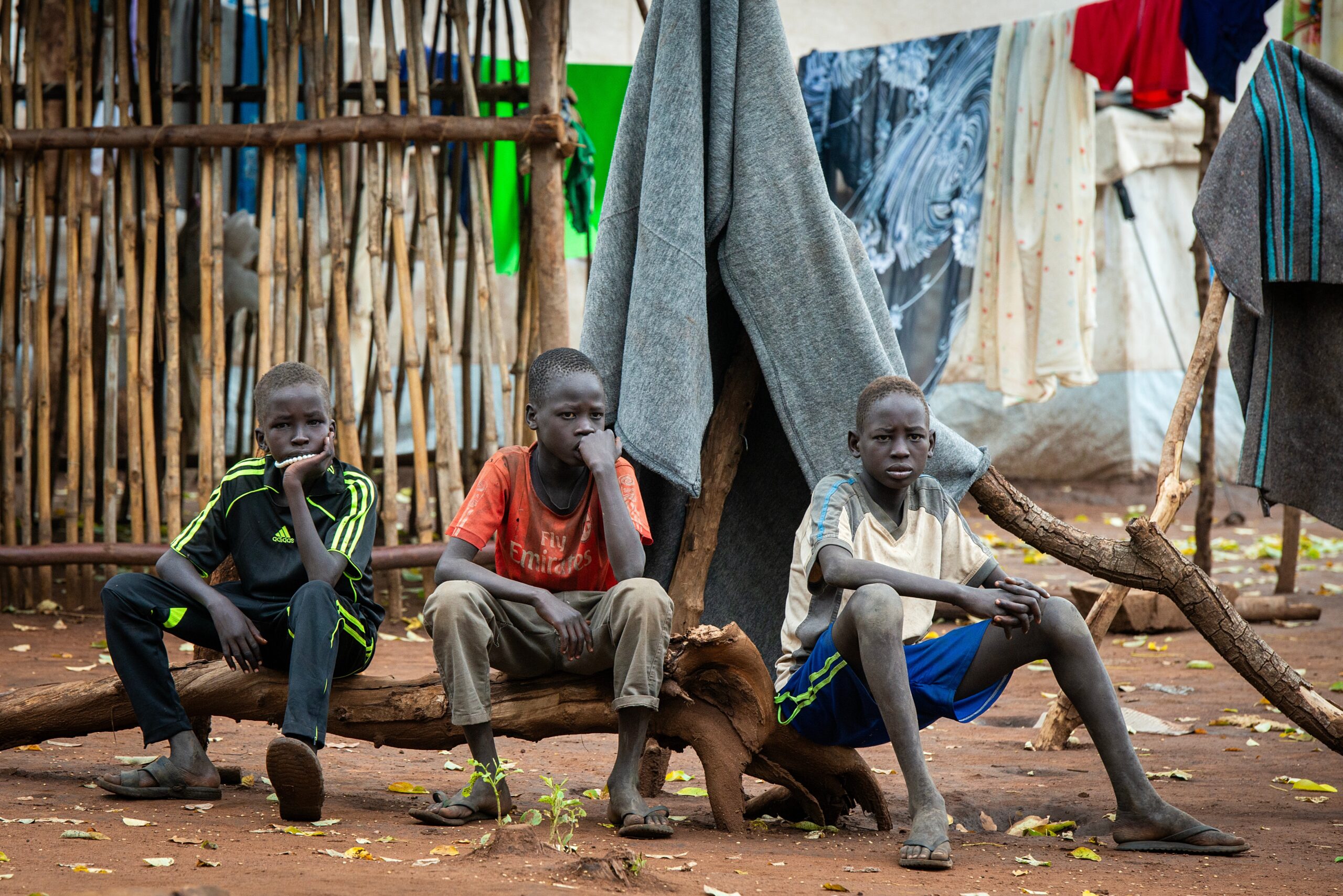
Beyond Sudan’s borders, nearly four million people – mostly women and children – have fled to neighboring countries, fueling one of the world’s largest displacement crises on the planet.
While host governments have kept borders open, they lack the resources to meet growing needs without sustained international support. Recent U.S. aid cuts have added to the strain, forcing humanitarian organizations to scale back essential services for refugees, particularly in South Sudan.
The war has triggered one of the world’s largest displacement crises beyond Sudan’s borders. Nearly four million people – mostly women and children – have fled.
SHF’s Origins
The SHF was originally established in 2006 as a UN-managed pooled fund designed to move money quickly in conflict environments.
Unlike traditional bilateral aid, pooled funds from multiple donors allow resources to be disbursed faster, redirected as front lines shift and targeted to urgent needs without lengthy bureaucratic delays.
Next Steps
A follow-up meeting in Berlin on April 15 will bring together Sudan Humanitarian Fund donors to assess progress, mobilize additional support and evaluate conditions on the ground.